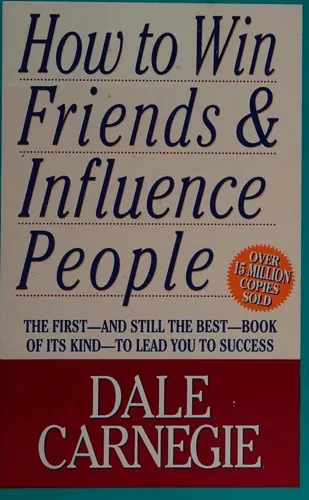
How to Win Friends and Influence People
Listen to it free. Get How to Win Friends and Influence People on Audible with a 30-day trial — cancel anytime.
Start listening freeon AudibleNew members only · many titles are included with the membership. As an Amazon Associate, Read Stacks earns from qualifying purchases and membership trials at no extra cost to you.
What this book is, and who it's for
Dale Carnegie's 1936 book is the ethical foundation underneath every modern persuasion or negotiation curriculum. The principles are unfashionable in their plainness — be genuinely interested in others, remember names, listen more than you talk, give honest appreciation — but ninety years of social science have basically confirmed Carnegie was right about the underlying mechanics. Read this as the operating system every more advanced influence book assumes is already running. The book's deepest argument is that influence is not technique but attention: most people fail to move others because they aren't actually paying attention to what those others want.
Carnegie's foundational claim: most influence failures are not technique failures, they are attention failures. The other person's name, perspective, and concerns must be genuinely valued before any influence work has a foundation to stand on.
How to apply How to Win Friends and Influence People in 3 steps
- 1Become genuinely interested in others
Carnegie's foundation, repeated for 90 years because it stays the limiting factor: in your next 5 conversations, ask more about the other person than you talk about yourself. Track whether you can recall something specific each person told you a week later.
- 2Remember the name and use it sparingly
Names are the most personal word. Use them at the start, the close, and once in the middle of substantive points. Overusing breaks the spell; never using leaves the conversation transactional. Carnegie's small mechanic with outsized social returns.
- 3Disagree by acknowledging first
When you disagree with someone, lead with what's true in their position before naming your disagreement. 'You're right that X. And here's where I see it differently.' The order matters: acknowledge first, then disagree. The technique works because most people can't hear disagreement until they feel heard.
Chapters
- Chapter 1‘If You Want to Gather Honey, Don’t Kick Over the Beehive’1.5 min
- Chapter 2The Big Secret of Dealing with People2 min
- Chapter 3‘He Who Can Do This Has the Whole World with Him. He Who Cannot Walks a Lonely Way’2 min
- Chapter 4Do This and You’ll Be Welcome Anywhere1.5 min
- Chapter 5A Simple Way to Make a Good First Impression1.5 min
- Chapter 6If You Don’t Do This, You Are Headed for Trouble2 min
- Chapter 7An Easy Way to Become a Good Conversationalist2 min
- Chapter 8How to Interest People2 min
- Chapter 9How to Make People Like You Instantly2 min
- Chapter 10You Can’t Win an Argument2 min
- Chapter 11A Sure Way of Making Enemies – and How to Avoid It1.5 min
- Chapter 12If You’re Wrong, Admit It1.5 min
- Chapter 13A Drop of Honey1.5 min
- Chapter 14The Secret of Socrates1.5 min
- Chapter 15The Safety Valve in Handling Complaints1.5 min
- Chapter 16How to Get Cooperation2 min
- Chapter 17A Formula That Will Work Wonders for You1.5 min
- Chapter 18What Everybody Wants1.5 min
- Chapter 19An Appeal That Everybody Likes1.5 min
- Chapter 20The Movies Do It. TV Does It. Why Don’t You Do It?1.5 min
- Chapter 21When Nothing Else Works, Try This1.5 min
- Chapter 22If You Must Find Fault, This Is the Way to Begin1.5 min
- Chapter 23How to Criticize – and Not Be Hated for It1.5 min
- Chapter 24Talk About Your Own Mistakes First1.5 min
- Chapter 25No One Likes to Take Orders1.5 min
- Chapter 26Let the Other Person Save Face1.5 min
- Chapter 27How to Spur People On to Success1.5 min
- Chapter 28Give a Dog a Good Name1.5 min
- Chapter 29Make the Fault Seem Easy to Correct2 min
- Chapter 30Making People Glad to Do What You Want2 min
Closing & reference
How to read this book. Each chapter is a ~30-second summary — the core insight, no filler. Open the chapters that grab you. If the book resonates, hear the full audiobook free with an Audible trial or buy the edition on Amazon (links below, affiliate-disclosed).
How to Win Friends and Influence People pairs well with
A single book is an argument. A stack is a curriculum. How to Win Friends and Influence People appears in this curated reading path — each pairs it with other books that sharpen its ideas, in a suggested reading order.
More books like How to Win Friends and Influence People
The other books in the curated reading paths How to Win Friends and Influence People belongs to. Each one sharpens, extends, or counter-argues something How to Win Friends and Influence People establishes — the compound is the reason these books sit together in a stack.
- Influence with integrityInfluenceRobert Cialdini
- Influence with integrityNever Split the DifferenceChris Voss
- Influence with integrityPre-SuasionRobert Cialdini
- Influence with integrityMade to StickChip Heath & Dan Heath
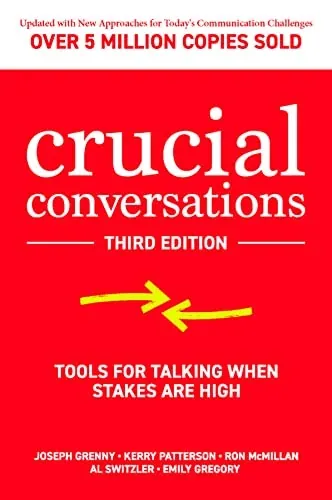
- Influence with integrityCrucial ConversationsPatterson, Grenny, McMillan & Switzler
- Influence with integrityThe Laws of Human NatureRobert Greene
- Influence with integrityThe Tipping PointMalcolm Gladwell
Frequently asked questions
What is How to Win Friends and Influence People about?+
Dale Carnegie's 1936 book is the ethical foundation underneath every modern persuasion or negotiation curriculum.
How long does it take to read How to Win Friends and Influence People?+
The full How to Win Friends and Influence People typically takes 4-6 hours to read cover-to-cover. The Read Stacks chapter summaries cover the same ideas in ~54.5 minutes total (34 chapters at ~30 seconds each).
Who is How to Win Friends and Influence People for?+
How to Win Friends and Influence People is for readers curious about why people think and decide the way they do. Useful for designers, marketers, negotiators, and anyone making decisions with imperfect information.
What are the key ideas in How to Win Friends and Influence People?+
The book covers ‘If You Want to Gather Honey, Don’t Kick Over the Beehive’, The Big Secret of Dealing with People, ‘He Who Can Do This Has the Whole World with Him. He Who Cannot Walks a Lonely Way’, Do This and You’ll Be Welcome Anywhere and A Simple Way to Make a Good First Impression. Each chapter has a free summary on Read Stacks (~30 seconds each).
Is How to Win Friends and Influence People worth reading?+
If you're interested in persuasion and negotiation, How to Win Friends and Influence People is widely considered essential. The Read Stacks chapter summaries help you decide — read the free first chapter, then buy the full book on Amazon if the argument resonates.
Books like How to Win Friends and Influence People
If How to Win Friends and Influence People resonated, these non-fiction books pick up the same threads.
From Read Stacks · Learn
How to get more out of this book
Two short essays on the meta-skill — what chapter summaries actually preserve, and the six retention techniques that decide whether what you read here is still useful six months from now.
- Are book summaries actually useful, or am I just cheating?
Chapter summaries are a navigation tool, not a substitute. Used right, they help you read more books fully — by helping you avoid the wrong ones. Used wrong, they're a comfort blanket that lets you feel like you're reading without engaging with the material.
6 min read
- I read a lot of books but can't remember anything. What works?
Forgetting most of what you read is normal, not a personal failing — your brain wasn't designed to retain prose at the rate modern readers consume it. The practices that DO work share one thing: they force you to USE the material instead of just consuming it. Six specific techniques, each tested across decades.
7 min read
Appears in these topics
How to Win Friends and Influence People is part of 2 curated reading lists — each a “best books on X” cluster with a synthesis on how the books fit together.