Influence with integrity
How to persuade without becoming a manipulator — eight books on the science of moving people honestly.
Listen to it free. Many of these books are on Audible — hear them free with a trial.
Start listening freeon AudibleNew members only · many titles are included with the membership. As an Amazon Associate, Read Stacks earns from qualifying purchases and membership trials at no extra cost to you.
Influence is unavoidable. Every meeting, every negotiation, every difficult conversation moves someone's position — or fails to. The only question is whether you're informed about how it works. This stack treats influence as a craft that can be done with integrity OR weaponized, and it stays on the integrity side. Dale Carnegie established the moral baseline ninety years ago; Robert Cialdini built the research-backed catalog of the levers themselves; Chris Voss adapted the tactics for high-stakes negotiation; Cialdini's later Pre-Suasion added the precision of the moments-before; the Heath brothers' Made to Stick taught how to make ideas survive contact with audiences; Patterson, Grenny, McMillan, and Switzler's Crucial Conversations operationalized the highest-stakes subset of the discipline; Robert Greene mapped the psychology underneath all of it; Malcolm Gladwell closes by widening the frame from individual persuasion to social epidemic — how ideas spread once they've been made persuasive and sticky. Read together, they form a curriculum on moving people you'd want to be moved by, at scales ranging from the one-on-one conversation to the contagion across a whole subculture.
The reading order
Each step below is one book. Click through to its chapter summaries — or read straight through the stack from top to bottom.
 1Step 1 · 34 chapters · 54.5 min
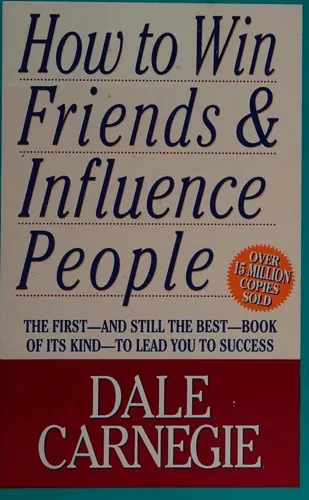
How to Win Friends and Influence People
by Dale Carnegie
Carnegie's 1936 classic is the ethical foundation: most people are not failing to influence because they lack technique — they're failing because they don't actually pay attention to the other person. Every more advanced book in this stack assumes Carnegie's principles are in place; he is the operating system.
 2Step 2 · 9 chapters · 15 min
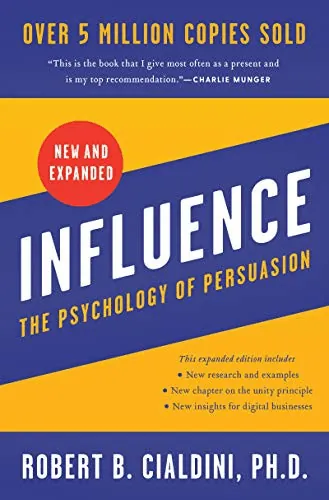
Influence
by Robert Cialdini
Robert Cialdini's research-backed catalog of the seven principles (reciprocation, liking, social proof, authority, scarcity, commitment-and-consistency, unity) is the precision-instruments layer between Carnegie's relational baseline and the more tactical books that follow. Read second, you learn to name which lever is being pulled in any given interaction — yours or someone else's.
 3Step 3 · 15 chapters · 23 min
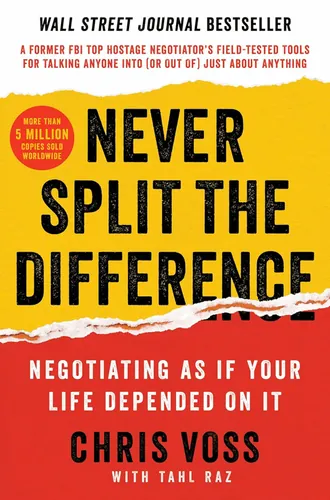
Never Split the Difference
by Chris Voss
Chris Voss, former FBI lead hostage negotiator, replaces the win-win mythology of business-school negotiation with the tactics that actually work under real pressure. Mirroring, labelling, and the 'No' that creates safety. Where Cialdini gives you the levers, Voss gives you the words for using them in real conversations.
 4Step 4 · 17 chapters · 25.5 min
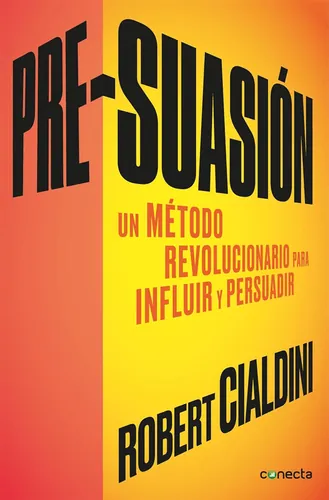
Pre-Suasion
by Robert Cialdini
Cialdini's follow-up to his original Influence shifts the focus to the moments before the request. What you direct attention to in those preceding seconds determines whether your message lands. Read after Voss, Pre-Suasion is the upstream complement: choose the right context, then deploy the right tactic.
 5Step 5 · 7 chapters · 11.5 min
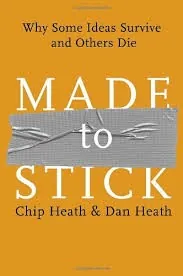
Made to Stick
by Chip Heath & Dan Heath
Chip and Dan Heath add the craft layer: how to make ideas survive contact with audiences. Their SUCCESs framework (Simple, Unexpected, Concrete, Credible, Emotional, Stories) is the technical complement to Carnegie's relational baseline and Cialdini's catalog. Read at this position, Made to Stick gives you the construction techniques the previous books described in principle.
 6Step 6 · 8 chapters · 13 min
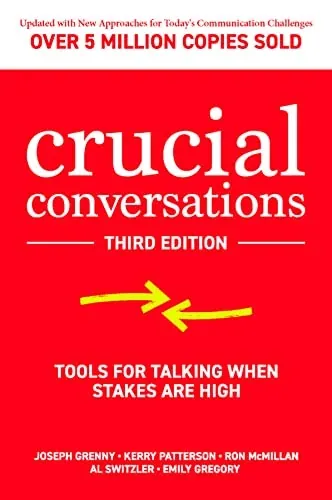
Crucial Conversations
by Patterson, Grenny, McMillan & Switzler
Patterson, Grenny, McMillan, and Switzler operationalize the highest-stakes subset of the influence discipline: conversations where stakes are high, opinions differ, and emotions run strong. Where Voss adapted hostage-negotiation tactics, Crucial Conversations builds the everyday-workplace version. Read this when you've noticed that the most consequential conversations in your life are the ones you handle worst.
 7Step 7 · 22 chapters · 32.5 min
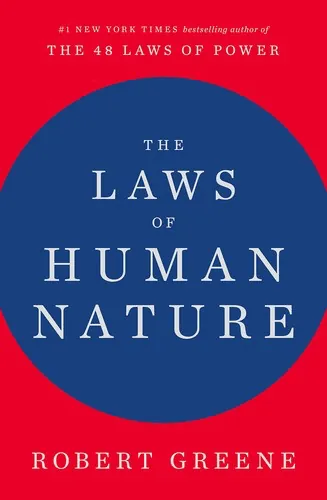
The Laws of Human Nature
by Robert Greene
Robert Greene pulls back from tactics to the deeper psychology people bring into every interaction. Envy, narcissism, group dynamics, the masks people wear. Read after the first six and Greene becomes a calibration manual — knowing the patterns lets you see them without becoming cynical.
 8Step 8 · 8 chapters · 14 min
The Tipping Point
by Malcolm Gladwell
Malcolm Gladwell closes the stack by widening the lens from one-on-one persuasion to social epidemic. The three rules — the Law of the Few (Connectors, Mavens, Salesmen), the Stickiness Factor, the Power of Context — explain why some ideas catch and others die regardless of how persuasively the original message was crafted. Read after Carnegie, Cialdini, Voss, Heath, and Greene, Gladwell adds the system-level frame: persuading one person is the tactical layer, but engineering an idea to spread through a population requires understanding how messages travel between social units. The book is the natural completion of the influence stack at the network scale.
Stack synthesis
The unifying claim across these eight: people don't change their minds because of arguments. They change their minds because of trust, context, craft, and the small adjustments that happen before the conversation officially begins. Carnegie says: be genuinely interested. Cialdini says: know the seven levers, name which one is firing. Voss says: make them feel heard. Pre-Suasion says: prepare the soil. The Heaths say: build the message so it survives. Patterson et al say: handle the highest-stakes versions with explicit discipline. Greene says: see the person, not just the position. Gladwell says: persuading one person is one problem; engineering the idea to spread to thousands is another, and the three rules of epidemics govern the second. The stack's antidote to manipulation is repetition of one idea — every honest influence technique is about helping the other person reach a decision they can endorse, not tricking them into one they'll regret. The eight books together cover the full scale from the single conversation to the social contagion, with integrity as the through-line at every level.
Frequently asked questions
What books are in the Influence with integrity stack?+
The Influence with integrity stack has 8 books: How to Win Friends and Influence People, Influence, Never Split the Difference, Pre-Suasion, Made to Stick, Crucial Conversations, The Laws of Human Nature and The Tipping Point. Read them in the order listed below — each step builds on the one before it.
Who is the Influence with integrity stack for?+
How to persuade without becoming a manipulator — eight books on the science of moving people honestly. It's for readers who want the full argument, not just one book's take on it — the stack works because each book adds a piece the others don't cover.
How long does the Influence with integrity stack take to read?+
The 8 full books typically take 32+ hours combined. Read Stacks' chapter summaries cover the same stack in about 189 minutes total, so you can preview the whole path before committing to any one book.
What order should I read the Influence with integrity stack in?+
In this order: 1. How to Win Friends and Influence People, 2. Influence, 3. Never Split the Difference, 4. Pre-Suasion, 5. Made to Stick, 6. Crucial Conversations, 7. The Laws of Human Nature, 8. The Tipping Point. The sequence matters — each book's summary links back to the ones before it, so reading out of order will make some references land less clearly.
What's the big idea behind the Influence with integrity stack?+
The unifying claim across these eight: people don't change their minds because of arguments.
Adjacent stacks
From Read Stacks · Learn
Get the most out of a multi-book stack
A stack only works if the ideas stick across all the books in it. These two essays cover the retention practices and pile-management discipline that make a stack actually compound.
- I read a lot of books but can't remember anything. What works?
Forgetting most of what you read is normal, not a personal failing — your brain wasn't designed to retain prose at the rate modern readers consume it. The practices that DO work share one thing: they force you to USE the material instead of just consuming it. Six specific techniques, each tested across decades.
7 min read
- Why do I keep buying books I never finish?
Most non-fiction readers buy 5-15 books per year and finish 2-3. The pile is not laziness — it's a navigation failure. Four specific reasons the system fails and four specific fixes, including how to use curated reading stacks to avoid the bad-purchase loop.
5 min read