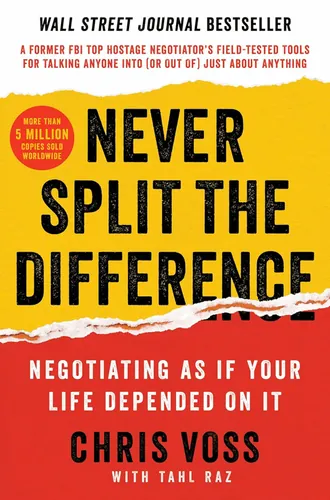
Never Split the Difference
by Chris Voss
Listen to it free. Get Never Split the Difference on Audible with a 30-day trial — cancel anytime.
Start listening freeon AudibleNew members only · many titles are included with the membership. As an Amazon Associate, Read Stacks earns from qualifying purchases and membership trials at no extra cost to you.
What this book is, and who it's for
Chris Voss, former lead FBI international kidnapping negotiator, replaces the win-win business-school version of negotiation with what actually works under real pressure — high stakes, asymmetric information, and an adversary who has no incentive to cooperate. The tactical moves (mirroring, labelling, the 'No' that creates safety, calibrated questions) come from cases where lives were on the line and don't degrade in lower-stakes commercial negotiations. Voss's deeper claim is that negotiation is emotional intelligence applied under pressure, not logic. Read this when you've noticed that the 'find common ground' approach keeps losing you ground.
Voss's negotiation discipline of demonstrating accurate understanding of the other side's perspective and emotional state before asking them to change position. The technique replaces win-win mythology with what actually works under real pressure.
How to apply Never Split the Difference in 3 steps
- 1Lead with tactical empathy
In your next negotiation or difficult conversation, start with a sentence demonstrating accurate understanding of the other side's position — emotional and substantive. 'It sounds like X is the constraint, and that's pushing you toward Y.' The accuracy of the empathy unlocks the rest.
- 2Use 'no' to create safety
Most negotiation advice pushes for 'yes' early. Voss's research is the opposite: making it safe to say 'no' produces more honest negotiation than pressuring for 'yes.' Ask: 'is it ridiculous to suggest X?' The other side can say 'no, not ridiculous' and engage productively.
- 3Mirror to surface information
When the other side says something, repeat the last 2-3 words back as a question. The mirror invites them to continue, fills the silence, surfaces what they haven't fully articulated. Voss's technique with the highest leverage-to-friction ratio.
Opening
Chapters
- Chapter 1The New Rules: How to Become the Smartest Person…in Any Room2 min
- Chapter 2Be a Mirror: How to Quickly Establish Rapport2 min
- Chapter 3Don’t Feel Their Pain, Label It: How to Create Trust with Tactical Empathy2 min
- Chapter 4Beware “Yes”-Master “No”: How to Generate Momentum and Make It Safe to Reveal the Real Stakes2 min
- Chapter 5Trigger the Two Words That Immediately Transform Any Negotiation: How to Gain the Permission to Persuade1.5 min
- Chapter 6Bend Their Reality: How to Shape What Is Fair2 min
- Chapter 7Create the Illusion of Control: How to Calibrate Questions to Transform Conflict into Collaboration2 min
- Chapter 8Guarantee Execution: How to Spot the Liars and Ensure Follow-Through from Everyone Else2 min
- Chapter 9Bargain Hard: How to Get Your Price1.5 min
- Chapter 10Find the Black Swan: How to Create Breakthroughs by Revealing the Unknown Unknowns2 min
Closing & reference
How to read this book. Each chapter is a ~30-second summary — the core insight, no filler. Open the chapters that grab you. If the book resonates, hear the full audiobook free with an Audible trial or buy the edition on Amazon (links below, affiliate-disclosed).
Never Split the Difference pairs well with
A single book is an argument. A stack is a curriculum. Never Split the Difference appears in 2 curated reading paths — each pairs it with other books that sharpen its ideas, in a suggested reading order.
More books like Never Split the Difference
The other books in the curated reading paths Never Split the Difference belongs to. Each one sharpens, extends, or counter-argues something Never Split the Difference establishes — the compound is the reason these books sit together in a stack.
- Influence with integrityHow to Win Friends and Influence PeopleDale Carnegie
- Influence with integrityInfluenceRobert Cialdini
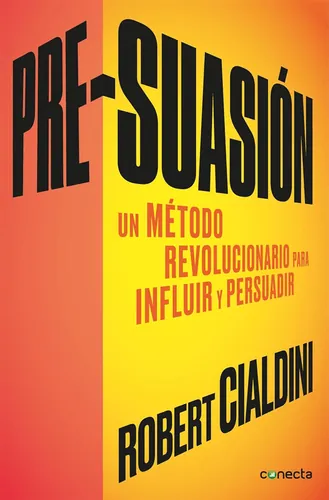
- Influence with integrityPre-SuasionRobert Cialdini
- Influence with integrityMade to StickChip Heath & Dan Heath
- Influence with integrityCrucial ConversationsPatterson, Grenny, McMillan & Switzler
- Influence with integrityThe Laws of Human NatureRobert Greene
- Influence with integrityThe Tipping PointMalcolm Gladwell
- Master power dynamicsThe Art of WarSun Tzu
Frequently asked questions
What is Never Split the Difference about?+
Chris Voss, former lead FBI international kidnapping negotiator, replaces the win-win business-school version of negotiation with what actually works under real pressure — high stakes, asymmetric information, and an adversary who has no incentive to cooperate.
How long does it take to read Never Split the Difference?+
The full Never Split the Difference typically takes 4-6 hours to read cover-to-cover. The Read Stacks chapter summaries cover the same ideas in ~23 minutes total (15 chapters at ~30 seconds each).
Who is Never Split the Difference for?+
Never Split the Difference is widely regarded as essential reading in its field. The Read Stacks summary is the fastest way to decide if the full book is worth your time before committing to it.
What are the key ideas in Never Split the Difference?+
The book covers The New Rules: How to Become the Smartest Person…in Any Room, Be a Mirror: How to Quickly Establish Rapport, Don’t Feel Their Pain, Label It: How to Create Trust with Tactical Empathy, Beware “Yes”-Master “No”: How to Generate Momentum and Make It Safe to Reveal the Real Stakes and Trigger the Two Words That Immediately Transform Any Negotiation: How to Gain the Permission to Persuade. Each chapter has a free summary on Read Stacks (~30 seconds each).
Is Never Split the Difference worth reading?+
If you're interested in persuasion and negotiation, Never Split the Difference is widely considered essential. The Read Stacks chapter summaries help you decide — read the free first chapter, then buy the full book on Amazon if the argument resonates.
Books like Never Split the Difference
If Never Split the Difference resonated, these non-fiction books pick up the same threads.
From Read Stacks · Learn
How to get more out of this book
Two short essays on the meta-skill — what chapter summaries actually preserve, and the six retention techniques that decide whether what you read here is still useful six months from now.
- Are book summaries actually useful, or am I just cheating?
Chapter summaries are a navigation tool, not a substitute. Used right, they help you read more books fully — by helping you avoid the wrong ones. Used wrong, they're a comfort blanket that lets you feel like you're reading without engaging with the material.
6 min read
- I read a lot of books but can't remember anything. What works?
Forgetting most of what you read is normal, not a personal failing — your brain wasn't designed to retain prose at the rate modern readers consume it. The practices that DO work share one thing: they force you to USE the material instead of just consuming it. Six specific techniques, each tested across decades.
7 min read
Appears in these topics
Never Split the Difference is part of 3 curated reading lists — each a “best books on X” cluster with a synthesis on how the books fit together.