Best books on communication
When stakes are high, communication breaks on emotion and identity, not facts — these five teach safety, listening, and matching.
Listen to it free. Go deeper — many of the books on this topic are free on Audible with a trial.
Start listening freeon AudibleNew members only · many titles are included with the membership. As an Amazon Associate, Read Stacks earns from qualifying purchases and membership trials at no extra cost to you.
Most people treat communication as transmission: say the right words clearly and the message gets through. The books here start from why that fails. When stakes and emotions are high, the breakdown is almost never about facts — it's about safety, feeling, and identity, and about two people having different conversations without realizing it. The through-line is that good communication is less about talking well than about making it safe to talk, and matching the person in front of you.
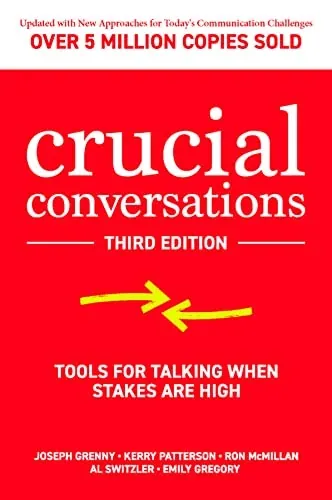
Crucial Conversations lays the foundation: when opinions vary, stakes are high, and emotions run strong, people default to silence or aggression. Its fix is to create safety first — a "pool of shared meaning" — by starting with heart and learning to spot the moment a dialogue turns unsafe. Douglas Stone, Bruce Patton, and Sheila Heen's Difficult Conversations, from the Harvard Negotiation Project, supplies the anatomy underneath: every hard conversation is really three — the "what happened" argument, the feelings conversation, and the identity conversation — and progress comes from shifting out of blame toward contribution, and telling the "third story."
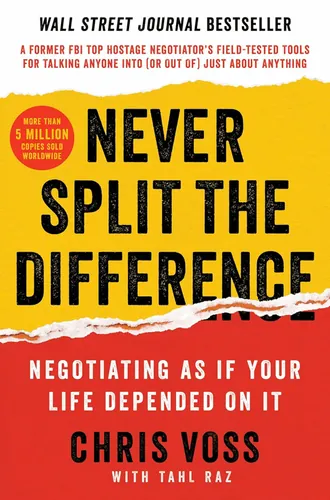
Charles Duhigg's Supercommunicators adds the matching principle: every exchange is a practical, emotional, or social conversation, and connection fails when one person answers a feelings question with a fix. His "looping for understanding" is the tool for proving you actually heard someone. Chris Voss's Never Split the Difference brings the high-stakes version from FBI hostage negotiation: tactical empathy, mirroring, labeling emotions, and calibrated questions are all, at root, advanced listening — the goal is to make the other side feel understood, not to win. Frank Luntz's Words That Work closes on the surface layer everyone obsesses over and few get right: "it's not what you say, it's what people hear" — word choice and framing decide whether your meaning ever lands.
Read together: communication is safety first, the right conversation second, deep listening third, and only then the words.
The reading list
Each book below is a step in the topic. Tap through to chapter summaries (free, no signup) or jump straight to the full book on Amazon.
 18 chapters · 13 min
Crucial Conversations
by Patterson, Grenny, McMillan & Switzler
The foundation for high-stakes talk: when stakes and emotions spike, people retreat to silence or aggression. Its remedy is to build safety first — a “pool of shared meaning” — and to start with heart before stating your path. The model the rest build on.
- Difficult ConversationsDouglas Stone22010 · find your next read
Difficult Conversations
by Douglas Stone
The Harvard Negotiation Project's anatomy of any hard talk: it's really three conversations — what happened, feelings, and identity. The shift from blame to “contribution,” and telling the “third story,” turns a confrontation into a problem two people solve together.
- SupercommunicatorsCharles Duhigg32024 · find your next read
Supercommunicators
by Charles Duhigg
Duhigg's matching principle: every conversation is practical, emotional, or social, and connection breaks when you answer one type with another. “Looping for understanding” — proving you heard — is the concrete skill, drawn from research on who consistently gets through.
 415 chapters · 23 min
Never Split the Difference
by Chris Voss
Voss brings FBI hostage negotiation to everyday conversation: tactical empathy, mirroring, labeling, and calibrated questions are all advanced listening. The counterintuitive lesson — making the other side feel understood beats trying to win — is why it's about communication, not just tactics.
- Words That WorkFrank Luntz52014 · find your next read
Words That Work
by Frank Luntz
Luntz on the surface layer everyone fixates on: “it's not what you say, it's what people hear.” His empirical craft of word choice and framing is the final mile — the same idea lands or dies on the exact words, once the safety and listening are in place.
More topics
19 other topic clusters in the library — habits + behavior change, influence + persuasion, Stoicism + Stoic philosophy, attention + focused work, decision-making + cognitive bias, startups + business + the operator mindset, mindset + growth + grit, power + social dynamics + how the world actually works, cognition + how the mind works, money + wealth + financial behavior, leadership, creativity, psychology, resilience, productivity, negotiation, career strategy, risk + uncertainty, meaning + purpose. Each has its own curated reading list with synthesis. Browse all topics →