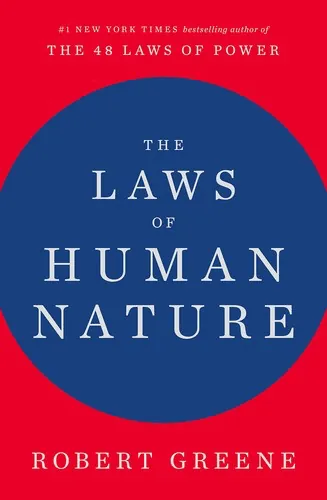
The Laws of Human Nature
Listen to it free. Get The Laws of Human Nature on Audible with a 30-day trial — cancel anytime.
Start listening freeon AudibleNew members only · many titles are included with the membership. As an Amazon Associate, Read Stacks earns from qualifying purchases and membership trials at no extra cost to you.
What this book is, and who it's for
Greene's 2018 book is the humane counterpart to his earlier 48 Laws of Power. Where 48 Laws maps surface strategy, Laws of Human Nature maps the psychology underneath — envy, narcissism, irrationality, group dynamics, the masks people wear at work, the patterns of bad leaders and good ones. The book is long (~600 pages) and dense, but the through-line is clinical observation: knowing the patterns lets you see them without becoming cynical. Read this when you've reached the part of life where 'why are they like this' becomes the most pressing question, and you'd rather have a model than a grudge.
Greene's later, more humane catalog of the psychological patterns operating beneath observable behavior — envy, narcissism, group dynamics, the masks people wear. The corrective complement to his earlier surface-tactics book.
How to apply The Laws of Human Nature in 3 steps
- 1Calibrate your read of difficult people
For each frustrating person in your life, identify which Greene pattern best explains their behavior — envy, narcissism, status anxiety, deep insecurity, etc. The diagnosis doesn't excuse the behavior but it changes your response from confused to strategic.
- 2See your own shadow patterns
Greene's harder ask: which of these laws operates in you? Honest self-examination usually surfaces 2-3. Naming them is the precondition for not acting them out unconsciously, especially under stress.
- 3Use the laws to choose your environment
Most workplace and relationship trouble comes from extended exposure to people whose patterns are incompatible with yours. The Greene framework gives you the diagnostic vocabulary to choose environments and partners more deliberately, and to leave the wrong ones earlier than guilt alone would.
Opening
Chapters
- Chapter 1Master Your Emotional Self2 min
- Chapter 2Transform Self-love into Empathy1.5 min
- Chapter 3See Through People’s Masks1.5 min
- Chapter 4Determine the Strength of People’s Character2 min
- Chapter 5Become an Elusive Object of Desire1.5 min
- Chapter 6Elevate Your Perspective1.5 min
- Chapter 7Soften People’s Resistance by Confirming Their Self-opinion1.5 min
- Chapter 8Change Your Circumstances by Changing Your Attitude1.5 min
- Chapter 9Confront Your Dark Side1.5 min
- Chapter 10Beware the Fragile Ego1.5 min
- Chapter 11Know Your Limits1.5 min
- Chapter 12Reconnect to the Masculine or Feminine Within You1.5 min
- Chapter 13Advance with a Sense of Purpose1.5 min
- Chapter 14Resist the Downward Pull of the Group1.5 min
- Chapter 15Make Them Want to Follow You1.5 min
- Chapter 16See the Hostility Behind the Friendly Façade1.5 min
- Chapter 17Seize the Historical Moment1.5 min
- Chapter 18Meditate on Our Common Mortality1.5 min
Closing & reference
How to read this book. Each chapter is a ~30-second summary — the core insight, no filler. Open the chapters that grab you. If the book resonates, hear the full audiobook free with an Audible trial or buy the edition on Amazon (links below, affiliate-disclosed).
The Laws of Human Nature pairs well with
A single book is an argument. A stack is a curriculum. The Laws of Human Nature appears in 2 curated reading paths — each pairs it with other books that sharpen its ideas, in a suggested reading order.
More books like The Laws of Human Nature
The other books in the curated reading paths The Laws of Human Nature belongs to. Each one sharpens, extends, or counter-argues something The Laws of Human Nature establishes — the compound is the reason these books sit together in a stack.
- Influence with integrityHow to Win Friends and Influence PeopleDale Carnegie
- Influence with integrityInfluenceRobert Cialdini
- Influence with integrityNever Split the DifferenceChris Voss
- Influence with integrityPre-SuasionRobert Cialdini
- Influence with integrityMade to StickChip Heath & Dan Heath
- Influence with integrityCrucial ConversationsPatterson, Grenny, McMillan & Switzler
- Influence with integrityThe Tipping PointMalcolm Gladwell
- Master power dynamicsThe Art of WarSun Tzu
Frequently asked questions
What is The Laws of Human Nature about?+
Greene's 2018 book is the humane counterpart to his earlier 48 Laws of Power.
How long does it take to read The Laws of Human Nature?+
The full The Laws of Human Nature typically takes 4-6 hours to read cover-to-cover. The Read Stacks chapter summaries cover the same ideas in ~32.5 minutes total (22 chapters at ~30 seconds each).
Who is The Laws of Human Nature for?+
The Laws of Human Nature is for readers curious about why people think and decide the way they do. Useful for designers, marketers, negotiators, and anyone making decisions with imperfect information.
What are the key ideas in The Laws of Human Nature?+
The book covers Master Your Emotional Self, Transform Self-love into Empathy, See Through People’s Masks, Determine the Strength of People’s Character and Become an Elusive Object of Desire. Each chapter has a free summary on Read Stacks (~30 seconds each).
Is The Laws of Human Nature worth reading?+
If you're interested in power dynamics and social strategy, The Laws of Human Nature is widely considered essential. The Read Stacks chapter summaries help you decide — read the free first chapter, then buy the full book on Amazon if the argument resonates.
Books like The Laws of Human Nature
If The Laws of Human Nature resonated, these non-fiction books pick up the same threads.

From Read Stacks · Learn
How to get more out of this book
Two short essays on the meta-skill — what chapter summaries actually preserve, and the six retention techniques that decide whether what you read here is still useful six months from now.
- Are book summaries actually useful, or am I just cheating?
Chapter summaries are a navigation tool, not a substitute. Used right, they help you read more books fully — by helping you avoid the wrong ones. Used wrong, they're a comfort blanket that lets you feel like you're reading without engaging with the material.
6 min read
- I read a lot of books but can't remember anything. What works?
Forgetting most of what you read is normal, not a personal failing — your brain wasn't designed to retain prose at the rate modern readers consume it. The practices that DO work share one thing: they force you to USE the material instead of just consuming it. Six specific techniques, each tested across decades.
7 min read
Appears in these topics
The Laws of Human Nature is part of this curated reading list — each a “best books on X” cluster with a synthesis on how the books fit together.