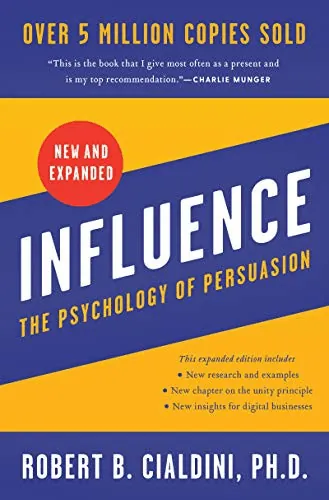
Influence: The Psychology of Persuasion
Listen to it free. Get Influence on Audible with a free trial for eligible new members — cancel anytime.
Start listening freeon AudibleNew members only · many titles are included with the membership. As an Amazon Associate, Read Stacks earns from qualifying purchases and membership trials at no extra cost to you.
What this book is, and who it's for
Robert Cialdini's 1984 classic — expanded with a seventh principle in 2021 — is the foundational research-backed catalog of the levers that move people. The seven principles (reciprocation, liking, social proof, authority, scarcity, commitment-and-consistency, unity) are not tricks; they are the underlying mechanics of how humans decide when full deliberation would cost too much time. Reading the book is partly defensive (notice which lever is being pulled on you) and partly offensive (move people who would otherwise drift). Read this after Carnegie and Voss as the precision-instruments layer of the influence curriculum, and before Pre-Suasion as the principles Cialdini's own follow-up assumes you already know.
Reciprocation, commitment-and-consistency, social proof, liking, authority, scarcity — Cialdini's research-backed catalog of the levers of persuasion. Later editions add a seventh: unity.
How to apply Influence in 3 steps
- 1Name the lever being pulled on you
Next time you feel persuaded toward something (purchase, agreement, signing up), pause and identify which of Cialdini's seven principles is firing — reciprocity, commitment-consistency, social proof, liking, authority, scarcity, unity. Naming dissolves most of its power.
- 2Use one lever ethically in your own work
Pick the principle that aligns with how you want to be persuasive (often social proof or authority for product work; reciprocity for relationship work). Build one specific application this week — testimonials prominently displayed, expert citations linked, etc.
- 3Flag manipulation when you see it
When you spot a principle being weaponized against you or someone you care about (fake scarcity, manufactured authority, weaponized liking), name it explicitly. The naming protects future decisions even when you can't escape the immediate one.
Chapters
How to read this book. Each chapter is a ~30-second summary — the core insight, no filler. Open the chapters that grab you. If the book resonates, hear the full audiobook free with an Audible trial or buy the edition on Amazon (links below, affiliate-disclosed).
Influence pairs well with
A single book is an argument. A stack is a curriculum. Influence appears in this curated reading path — each pairs it with other books that sharpen its ideas, in a suggested reading order.
More books like Influence
The other books in the curated reading paths Influence belongs to. Each one sharpens, extends, or counter-argues something Influence establishes — the compound is the reason these books sit together in a stack.
- Influence with integrityHow to Win Friends and Influence PeopleDale Carnegie
- Influence with integrityNever Split the DifferenceChris Voss
- Influence with integrityPre-SuasionRobert Cialdini
- Influence with integrityMade to StickChip Heath & Dan Heath
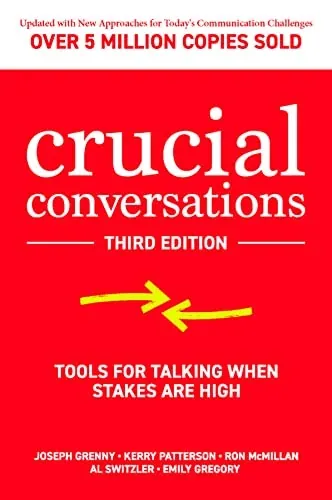
- Influence with integrityCrucial ConversationsPatterson, Grenny, McMillan & Switzler
- Influence with integrityThe Laws of Human NatureRobert Greene
- Influence with integrityThe Tipping PointMalcolm Gladwell
Frequently asked questions
What is Influence about?+
Robert Cialdini's 1984 classic — expanded with a seventh principle in 2021 — is the foundational research-backed catalog of the levers that move people.
How long does it take to read Influence?+
The full Influence typically takes 4-6 hours to read cover-to-cover. The Read Stacks chapter summaries cover the same ideas in ~15 minutes total (9 chapters at ~30 seconds each).
Who is Influence for?+
Influence is for readers curious about why people think and decide the way they do. Useful for designers, marketers, negotiators, and anyone making decisions with imperfect information.
What are the key ideas in Influence?+
The book covers Weapons of Influence, Reciprocation, Liking, Social Proof and Authority. Each chapter has a free summary on Read Stacks (~30 seconds each).
Is Influence worth reading?+
If you're interested in persuasion and negotiation, Influence is widely considered essential. The Read Stacks chapter summaries help you decide — read the free first chapter, then buy the full book on Amazon if the argument resonates.
Books like Influence
If Influence resonated, these non-fiction books pick up the same threads.
From Read Stacks · Learn
How to get more out of this book
Three short guides: how to take notes on a non-fiction book, how to summarise a chapter in your own words, and the retention techniques that decide whether what you read here is still useful six months from now.
- How do I take notes on a non-fiction book?
Decide what the notes are for, read a full section before writing, and use the same short layout for every chapter: claim, reasons, evidence, terms and your own response, all in your own words with page numbers. Turn each note into questions for review, and finish with a one-page summary of the whole book.
5 min read
- How do I summarise a non-fiction chapter?
Read the chapter's opening and closing pages first, write its main claim as one sentence, list the two to four reasons the author gives and the best piece of evidence, then close the book and write a short paragraph from memory. Check it against the text and add one clearly labelled line of your own.
5 min read
- I read a lot of books but can't remember anything. What works?
Forgetting most of what you read is normal, not a personal failing — your brain wasn't designed to retain prose at the rate modern readers consume it. The practices that DO work share one thing: they force you to USE the material instead of just consuming it. Six specific techniques, each tested across decades.
7 min read
Appears in these topics
Influence is part of 2 curated reading lists — each a “best books on X” cluster with a synthesis on how the books fit together.