Best books on negotiation
Every conversation with stakes is a negotiation — these five books teach the mechanics most people never learn.
Listen to it free. Go deeper — many of the books on this topic are free on Audible with a trial.
Start listening freeon AudibleNew members only · many titles are included with the membership. As an Amazon Associate, Read Stacks earns from qualifying purchases and membership trials at no extra cost to you.
Most people treat negotiation as a talent you either have or don't. The five books in this cluster treat it as a learnable mechanic — and they disagree with each other in useful ways.
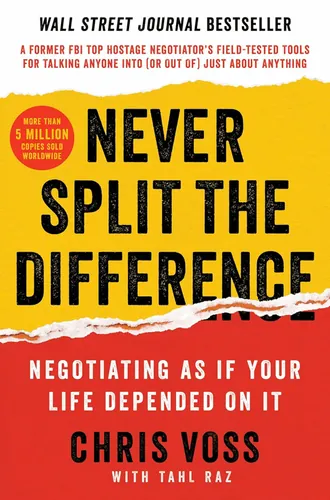
Chris Voss's Never Split the Difference is the field manual. Voss spent decades as the FBI's lead hostage negotiator, and his core claim inverts the classic advice: negotiation isn't rational compromise, it's emotional discovery. Tactical empathy — labeling the other side's fears and mirroring their words — gets you further than any concession schedule, and "no" is the start of a negotiation, not the end of one.
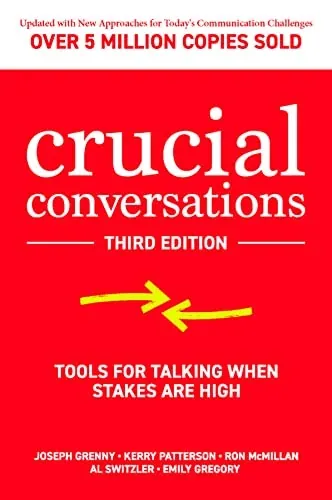
Crucial Conversations covers the negotiations you don't call negotiations: the high-stakes, opinions-vary, emotions-run-strong conversations at work and home. Its central tool — noticing when safety collapses and restoring it before pushing content — is the piece Voss's adversarial framing leaves out.
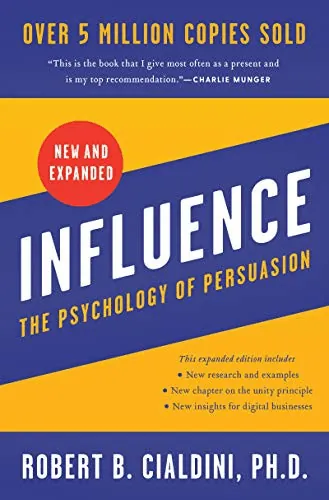
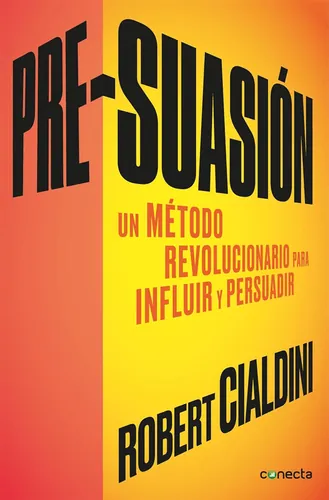
Robert Cialdini's Influence explains the machinery underneath both: reciprocity, commitment, social proof, authority, liking, scarcity. You cannot defend against pressure you can't name, and you cannot ethically apply pressure you don't understand. Pre-Suasion, Cialdini's sequel, moves the lens earlier — the moment before the message, when attention is directed, decides most of the outcome.
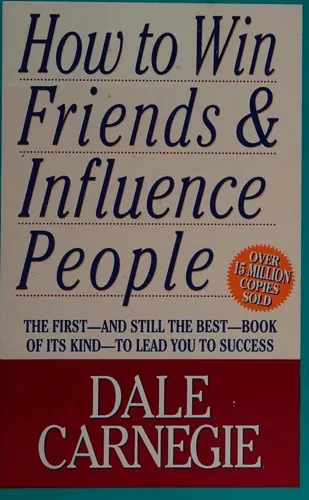
Dale Carnegie's How to Win Friends and Influence People is the oldest book here and still the foundation the others quietly assume: genuine interest in the other person is not a tactic, it's the precondition. Read Voss for the table, Patterson for the hallway, Cialdini for the machinery, and Carnegie for the posture. Together they cover the full stack: what to say, when to say it, why it works, and who you have to be for any of it to land.
The reading list
Each book below is a step in the topic. Tap through to chapter summaries (free, no signup) or jump straight to the full book on Amazon.
 115 chapters · 23 min
Never Split the Difference
by Chris Voss
The field manual. Tactical empathy, mirroring, calibrated questions — hostage-negotiation mechanics that transfer to salaries, deals, and daily life.
 28 chapters · 13 min
Crucial Conversations
by Patterson, Grenny, McMillan & Switzler
The negotiations you don't call negotiations. Restoring safety when a high-stakes conversation turns defensive is the skill everything else depends on.
 39 chapters · 15 min
Influence
by Robert Cialdini
The machinery underneath. Six principles of compliance — you can't defend against pressure you can't name.
 417 chapters · 25.5 min
Pre-Suasion
by Robert Cialdini
The moment BEFORE the message. Directing attention pre-frames the decision — most outcomes are set before the ask.
 534 chapters · 54.5 min
How to Win Friends and Influence People
by Dale Carnegie
The posture the others assume. Genuine interest in the other side is the precondition, not a tactic.
Key concepts in this topic
Tap a concept for its definition + primary book attribution. All concepts: browse the full glossary →
More topics
19 other topic clusters in the library — habits + behavior change, influence + persuasion, Stoicism + Stoic philosophy, attention + focused work, decision-making + cognitive bias, startups + business + the operator mindset, mindset + growth + grit, power + social dynamics + how the world actually works, cognition + how the mind works, money + wealth + financial behavior, leadership, creativity, psychology, communication, resilience, productivity, career strategy, risk + uncertainty, meaning + purpose. Each has its own curated reading list with synthesis. Browse all topics →