Best books on risk + uncertainty
How to make decisions when you can't know the odds — and why the biggest risks are the ones you don't see.
Listen to it free. Go deeper — many of the books on this topic are free on Audible with a trial.
Start listening freeon AudibleNew members only · many titles are included with the membership. As an Amazon Associate, Read Stacks earns from qualifying purchases and membership trials at no extra cost to you.
Most risk advice assumes you know the odds. The five books in this cluster start from the honest position: in the decisions that matter, you usually don't.
Nassim Taleb's Antifragile is the cornerstone. Beyond robustness — surviving shocks — some systems gain from disorder, and the practical move is structuring your life and bets so volatility helps you: small exposures with unlimited upside, strict caps on downside, and via negativa (removing fragilities rather than adding interventions). His Skin in the Game adds the ethical filter: never take risk advice from someone who doesn't share the downside. Asymmetry in payoffs corrupts everything from banking to punditry, and the Lindy effect — what has survived tends to keep surviving — beats most forecasting.
Daniel Kahneman's Thinking, Fast and Slow explains why your intuitions about risk are systematically wrong: loss aversion makes you overpay to avoid small losses, the availability heuristic makes vivid risks feel likely, and overconfidence makes your error bars too narrow. Dan Ariely's Predictably Irrational runs the experiments that make it concrete — we don't misjudge risk randomly; we misjudge it in repeatable, exploitable patterns.
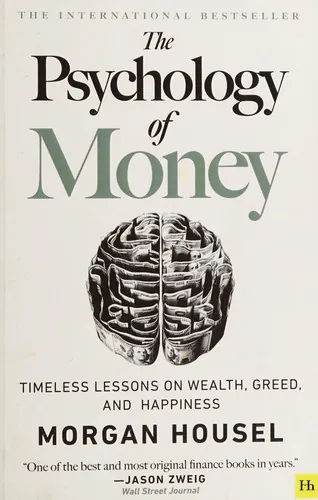
Morgan Housel's The Psychology of Money translates all of it into the domain where most people meet risk: room for error is the most underrated financial skill, tail events drive most outcomes, and the goal is staying in the game long enough for compounding to work. Read together: assume you don't know the odds (Taleb), assume your brain lies about them (Kahneman, Ariely), demand skin in the game from anyone advising you, and build buffers so no single mistake ends you (Housel).
The reading list
Each book below is a step in the topic. Tap through to chapter summaries (free, no signup) or jump straight to the full book on Amazon.
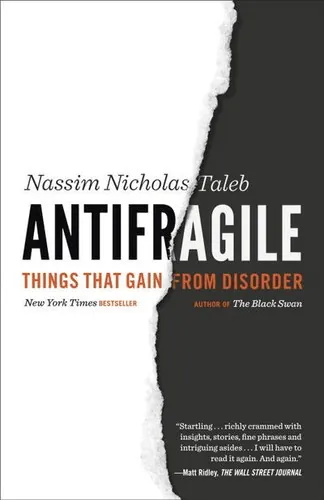 110 chapters · 17 min
Antifragile
by Nassim Nicholas Taleb
The cornerstone. Structure your bets so volatility helps you — capped downside, open upside, via negativa.
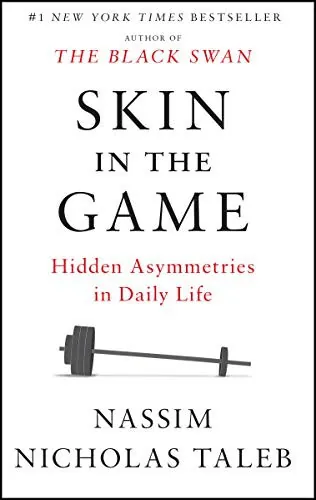 28 chapters · 13.5 min
Skin in the Game
by Nassim Nicholas Taleb
The ethical filter. Never take risk advice from someone who doesn't share the downside.
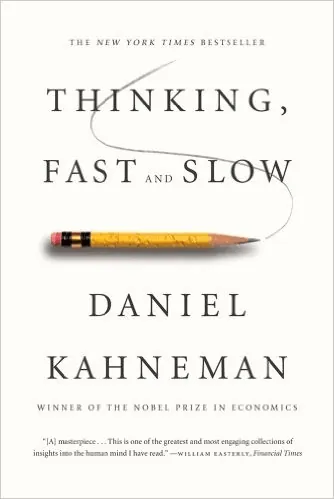 338 chapters · 75.5 min
Thinking, Fast and Slow
by Daniel Kahneman
Why your risk intuitions lie. Loss aversion, availability, overconfidence — the biases with the biggest price tags.
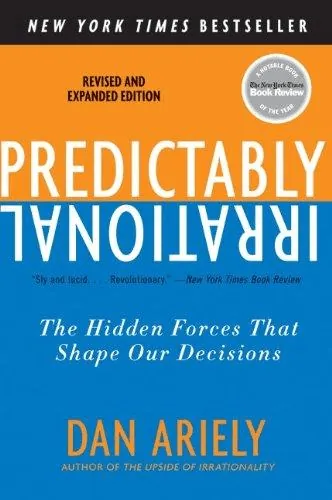 413 chapters · 22.5 min
Predictably Irrational
by Dan Ariely
The experiments. We misjudge risk in repeatable, exploitable patterns — knowing them is half the defense.
 520 chapters · 36 min
The Psychology of Money
by Morgan Housel
Risk in practice. Room for error, tail events, and staying in the game long enough for compounding to work.
Key concepts in this topic
- Antifragile
- Skin in the game
- Via negativa
- Black swan event
- Loss aversion
- Lindy effect
- Asymmetric bet
- Survivorship bias
Tap a concept for its definition + primary book attribution. All concepts: browse the full glossary →
More topics
19 other topic clusters in the library — habits + behavior change, influence + persuasion, Stoicism + Stoic philosophy, attention + focused work, decision-making + cognitive bias, startups + business + the operator mindset, mindset + growth + grit, power + social dynamics + how the world actually works, cognition + how the mind works, money + wealth + financial behavior, leadership, creativity, psychology, communication, resilience, productivity, negotiation, career strategy, meaning + purpose. Each has its own curated reading list with synthesis. Browse all topics →