Nassim Nicholas Taleb
This is the complete, plain-English guide: the Incerto in order, where to start, his big ideas explained, famous quotes, and the misreadings to avoid.
The Incerto · 5 books
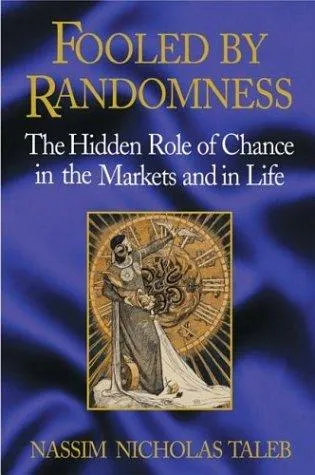
Fooled by Randomness
2001
Get it on Amazon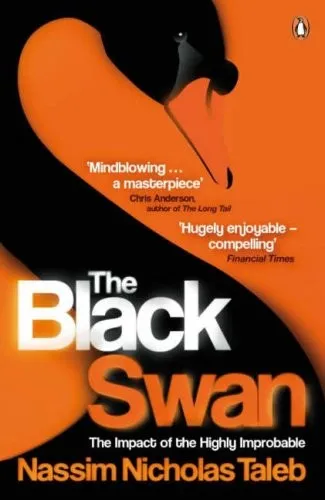
The Black Swan
2007
Get it on Amazon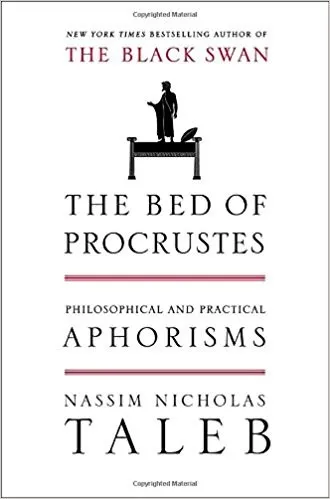
The Bed of Procrustes
2010
Get it on Amazon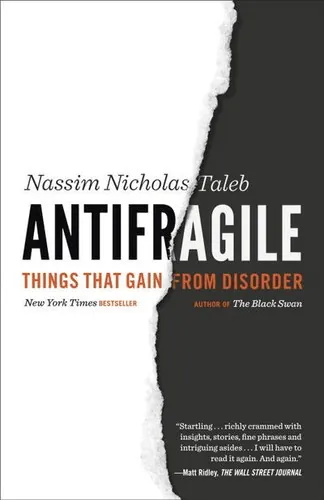
Antifragile
2012
Get it on Amazon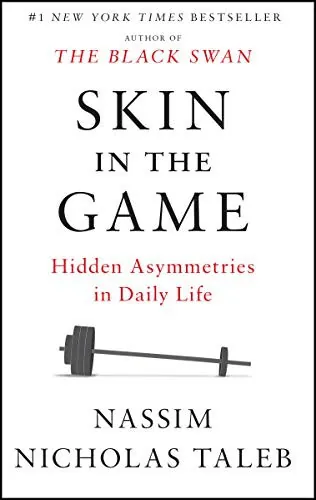
Skin in the Game
2018
Get it on Amazon
Affiliate links — if you buy, we earn a commission at no extra cost to you.
Fast facts
- Born
- September 12, 1960 · Lebanon
- Nationality
- Lebanese-American
- Background
- Options trader; risk scholar
- Known for
- The Black Swan; antifragility
- Main work
- The Incerto (5 books)
- Best first book
- Fooled by Randomness
- Most famous
- The Black Swan (2007)
- Most original
- Antifragile (2012)
Where to start with Nassim Taleb
Start with Fooled by Randomness. It’s the gentlest entry to his style and sets up everything else. Then read The Black Swan (his most famous), then Antifragile (his most original — denser, so save it for third), and Skin in the Game (the most practical). The aphorisms in The Bed of Procrustes can be read anytime.
- 1
Fooled by Randomness
Find it on Amazon· affiliateThe gentlest way in — luck vs. skill. It sets up everything that follows.
- 2
The Black Swan
Find it on Amazon· affiliateHis landmark idea about rare, extreme events. The most quoted Incerto book.
- 3
Antifragile
Find it on Amazon· affiliateThe big, original payoff — how to gain from disorder. Denser, but the heart of his thinking.
- 4
Skin in the Game
Find it on Amazon· affiliateThe ethical conclusion — risk symmetry. The most immediately practical.
- 5
The Bed of Procrustes
Find it on Amazon· affiliateAphorisms — read it anytime, in small bites, alongside the others.
Listen to it free. Many of Nassim Nicholas Taleb's books are on Audible — hear one free with a trial.
Start listening freeon AudibleNew members only · many titles are included with the membership. As an Amazon Associate, Read Stacks earns from qualifying purchases and membership trials at no extra cost to you.
The Incerto, in order
His five-book series on uncertainty, in publication order. Where we host a chapter-by-chapter summary, there’s a link to read it free.
- 2001
1. Fooled by Randomness
Moderatebest first readThe first Incerto book. How we mistake luck for skill — in markets and in life — and systematically underestimate the role of randomness in success and failure.
- 2007
2. The Black Swan
ModerateHis most famous book, and eerily timed before the 2008 crash. Rare, high-impact, unpredictable events ('black swans') shape history far more than the routine — yet we keep building models that ignore them.
- 2010
3. The Bed of Procrustes
GentleA short book of philosophical aphorisms — the Incerto distilled into one-liners. A change of pace; best read in small doses between the bigger books.
- 2012
4. Antifragile
HardHis most original idea and, many say, his best book. Some things don't just survive disorder — they get stronger from it. A framework for building systems, careers, and lives that gain from volatility.
- 2018
5. Skin in the Game
ModerateThe ethical capstone. Never trust advice from someone who bears no downside if they're wrong. Symmetry of risk and reward as the hidden law behind ethics, markets, and expertise.
His big ideas, explained simply
The Black Swan
An event with three traits: it's rare, it has extreme impact, and it looks predictable in hindsight (but wasn't beforehand). History is largely driven by these — wars, crashes, breakthroughs — yet our models assume a tame, bell-curve world.
Antifragility
Taleb's coined concept and his proudest contribution. Beyond 'robust' or 'resilient': the robust resists shocks and stays the same, but the antifragile actually improves from stress, volatility, and disorder — like muscles, or evolution.
Skin in the game
You shouldn't take advice from, or grant authority to, people who face no consequences if they're wrong. Symmetry of risk and reward keeps systems honest and filters out reckless 'experts' who privatize gains and socialize losses.
Via negativa
Improvement by subtraction. Often the highest-leverage move isn't adding something clever but removing the fragile, the harmful, or the unnecessary — what to avoid matters more than what to do.
The Lindy effect
For non-perishable things (books, ideas, technologies), life expectancy grows with age: the longer something has survived, the longer it's likely to last. A 50-year-old book will probably outlive a 1-year-old one.
The barbell strategy
Combine extreme safety with a small dose of extreme risk, and avoid the fragile middle. Keep most of your resources ultra-safe, then take a few high-upside, capped-downside bets. You're protected from black swans and exposed to lucky ones.
The ludic & narrative fallacies
The ludic fallacy: mistaking the tidy odds of games for the messy uncertainty of real life. The narrative fallacy: our compulsion to spin neat stories that make random events feel inevitable — and fool us into false confidence.
Famous quotes — and what they actually mean
“The three attributes of a Black Swan: rarity, extreme impact, and retrospective (though not prospective) predictability.”
His precise definition — note the third part: we can explain these events afterward, which fools us into thinking we could have seen them coming.
“The resilient resists shocks and stays the same; the antifragile gets better.”
The one-line distinction at the core of his most original book — and the property he argues we should engineer into everything.
“Don't tell me what you think, tell me what you have in your portfolio.”
The skin-in-the-game test in a sentence: trust people's exposure, not their opinions — what they risk reveals what they truly believe.
Common misreadings to avoid
The myth: A 'black swan' is just any bad surprise.
What is true: Taleb's term is specific: rare AND extreme in impact AND rationalized only in hindsight. A predictable downturn, or a small surprise, isn't a black swan. (He also notes some black swans are positive.) Overusing the phrase drains it of meaning — which annoys him greatly.
The myth: Antifragile just means tough or resilient.
What is true: That's the whole point he's making against: resilient things merely endure shocks unchanged. Antifragile things GAIN from shocks. It's a genuinely new third category, not a synonym for robust.
The myth: Taleb is just a contrarian provocateur.
What is true: The combative style is real, but underneath is a consistent program: take rare, extreme risk seriously; demand skin in the game; prefer subtraction; and stay humble about what we can't predict. Read for the ideas, not the Twitter feuds.
Frequently asked questions
What is the Incerto and in what order should I read it?
The Incerto is Taleb's five-book series on uncertainty: Fooled by Randomness (2001), The Black Swan (2007), The Bed of Procrustes (2010), Antifragile (2012), and Skin in the Game (2018). A good order: Fooled by Randomness → The Black Swan → Antifragile → Skin in the Game, with The Bed of Procrustes (aphorisms) dipped into anytime.
What is the best Nassim Taleb book to start with?
Fooled by Randomness is the most approachable entry. The Black Swan is the most famous and influential. If you only read one, many readers say Antifragile is his most original and rewarding — but it's also the densest, so it's better second or third.
What is Nassim Taleb's best book?
It's debated. The Black Swan is the most influential; Antifragile is the most original and many fans' favorite; Fooled by Randomness is the most accessible; Skin in the Game is the most practical. All are part of one connected project, the Incerto.
Is Antifragile hard to read?
It's the densest of the Incerto — wide-ranging, opinionated, and digressive. It's very rewarding, but most readers find it easier after Fooled by Randomness and The Black Swan have introduced his style and vocabulary.
Who is Nassim Nicholas Taleb?
Nassim Nicholas Taleb (born 1960) is a Lebanese-American essayist, former options trader, and risk scholar best known for The Black Swan and the concept of antifragility. His Incerto series explores uncertainty, risk, and how to live and decide under it.
Keep reading on Read Stacks
- Antifragile — free chapter summary →
- Skin in the Game — free chapter summary →
- Yuval Noah Harari — ideas & where to start →
- Malcolm Gladwell — ideas & where to start →
- Browse all authors →
- The full book library →
- Curated reading stacks →
- Signature quotes by book →
Researched and written by the Read Stacks editorial team. Last verified August 27, 2026. Facts on Taleb’s life and works follow the public record; quotations name their source work.