Best books on power + social dynamics + how the world actually works
How power actually moves through groups — and what to do about it.
Listen to it free. Go deeper — many of the books on this topic are free on Audible with a trial.
Start listening freeon AudibleNew members only · many titles are included with the membership. As an Amazon Associate, Read Stacks earns from qualifying purchases and membership trials at no extra cost to you.
The power literature splits the audience: some read these books to acquire power, others to defend against people who do. Both readings are productive because the mechanics described are real. The five books in this cluster don't moralize — they describe what is, and let you decide what to do with it.
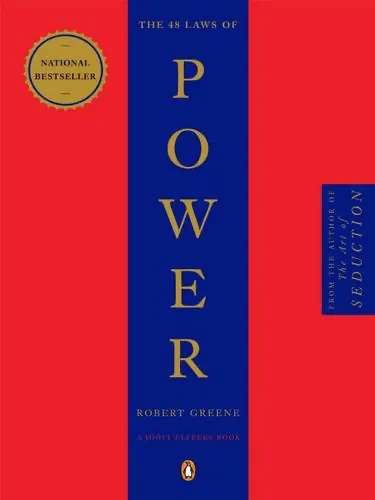
Robert Greene's The 48 Laws of Power is the foundational text: 48 distilled laws drawn from 3,000 years of history (court intrigue, military campaigns, corporate politics, art). Greene's laws read as cynical because they describe behavior most of us prefer not to acknowledge, but the patterns are robust — once you see them, you can't unsee them in your own organization.
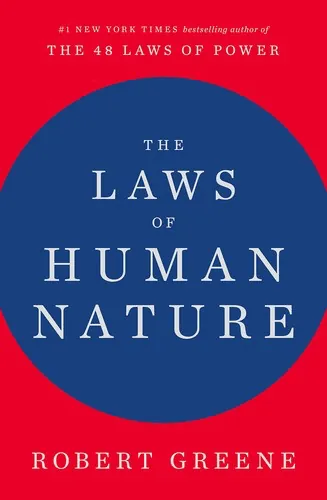
Greene's The Laws of Human Nature extends the framework from power dynamics to psychological dynamics: envy, narcissism, group-think, irrationality. Where 48 Laws describes the moves people make, Laws of Human Nature describes the wiring that makes those moves predictable.
Nassim Taleb's Antifragile introduces the structural framing: fragile systems break under volatility, robust systems resist it, antifragile systems get stronger from it. Applied to power: institutional power is fragile (single failures cascade), distributed power is robust, and the people who get stronger from disorder are antifragile. The reading implication: don't try to predict the next shock; build systems that benefit from shocks generally.
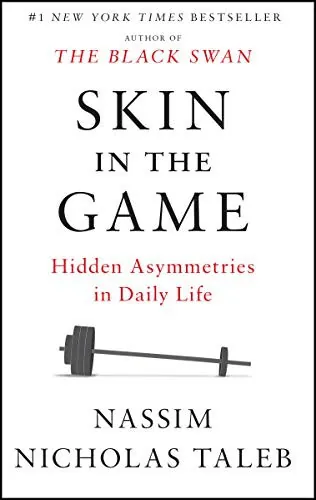
Taleb's Skin in the Game adds the ethical layer: people who don't bear the consequences of their decisions make worse decisions than those who do. The implication for power is sharp — anyone advising you whose downside doesn't match their upside is structurally untrustworthy regardless of credentials.
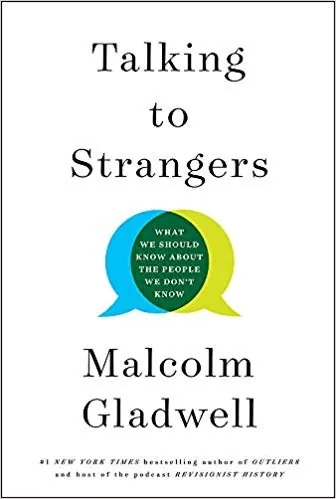
Malcolm Gladwell's Talking to Strangers is the wildcard: the mechanisms by which we misread strangers (default-to-truth, transparency illusion, mismatch problems) explain how power-dynamics texts sometimes get the details wrong even when the patterns are right. Gladwell + Greene reading together is sharper than either alone.
Read together: power dynamics (Greene), psychological dynamics (Greene), structural fragility (Taleb), skin in the game (Taleb), and the limits of our ability to read strangers (Gladwell). The combination produces a clearer view of how the world actually works than any of them individually.
The reading list
Each book below is a step in the topic. Tap through to chapter summaries (free, no signup) or jump straight to the full book on Amazon.
 150 chapters · 89 min
The 48 Laws of Power
by Robert Greene
Foundational. 48 laws drawn from 3,000 years of history. The patterns are robust — once you see them, you can't unsee them.
 222 chapters · 32.5 min
The Laws of Human Nature
by Robert Greene
Extends to psychological dynamics. Where 48 Laws describes the moves, Laws of Human Nature describes the wiring that makes those moves predictable.
 310 chapters · 17 min
Antifragile
by Nassim Nicholas Taleb
Structural framing. Fragile-robust-antifragile. Don't predict the next shock; build systems that benefit from shocks generally.
 48 chapters · 13.5 min
Skin in the Game
by Nassim Nicholas Taleb
Ethical layer. Anyone advising you whose downside doesn't match their upside is structurally untrustworthy regardless of credentials.
 512 chapters · 20.5 min
Talking to Strangers
by Malcolm Gladwell
Wildcard. The mechanisms by which we misread strangers (default-to-truth, transparency illusion) explain when power-dynamics intuition fails.
 613 chapters · 25 min
The Art of War
by Sun Tzu
The primary-source military-strategy text Greene's 48 Laws draws on. Deception is the foundation of warfare — five factors and seven questions decide the campaign before it begins.
Key concepts in this topic
Tap a concept for its definition + primary book attribution. All concepts: browse the full glossary →
More topics
19 other topic clusters in the library — habits + behavior change, influence + persuasion, Stoicism + Stoic philosophy, attention + focused work, decision-making + cognitive bias, startups + business + the operator mindset, mindset + growth + grit, cognition + how the mind works, money + wealth + financial behavior, leadership, creativity, psychology, communication, resilience, productivity, negotiation, career strategy, risk + uncertainty, meaning + purpose. Each has its own curated reading list with synthesis. Browse all topics →