Best books on money + wealth + financial behavior
How money actually behaves — versus how the math says it should.
Listen to it free. Go deeper — many of the books on this topic are free on Audible with a trial.
Start listening freeon AudibleNew members only · many titles are included with the membership. As an Amazon Associate, Read Stacks earns from qualifying purchases and membership trials at no extra cost to you.
Personal finance is 90% behavior and 10% math, which is why the math-heavy books leave most readers unchanged and the behavior-focused books in this cluster move the needle.
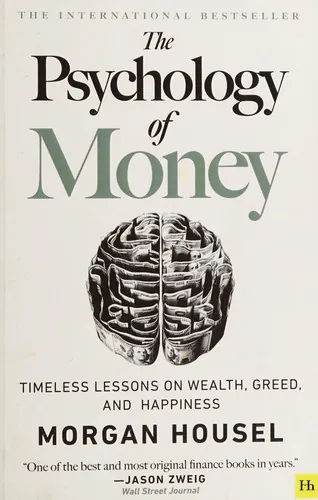
Morgan Housel's The Psychology of Money is the foundational text: 19 short stories about how money actually behaves in lives — wealthy janitors, bankrupt executives, what "enough" means, the role of luck and risk. Housel's central insight: doing well with money has more to do with how you behave than with what you know, and the math is the same for everyone but the behavior isn't.
Eric Jorgenson's The Almanack of Naval Ravikant sits in the same neighborhood from a different angle: build wealth through equity ownership in things that scale, work in your specific knowledge, leverage media/code/capital. Naval's aphoristic format makes it the book you'll re-read in fragments, which is the point.
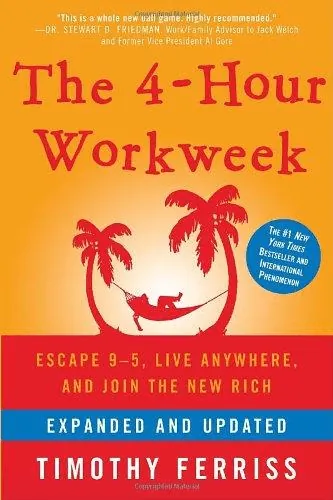
Tim Ferriss's The 4-Hour Workweek attacks the money question from time: most of "work" is theater that consumes attention without producing leverage. Eliminate-automate-delegate. The book is less about the literal 4-hour week and more about the asymmetry between time-traded-for-money work and leverage-based earnings.
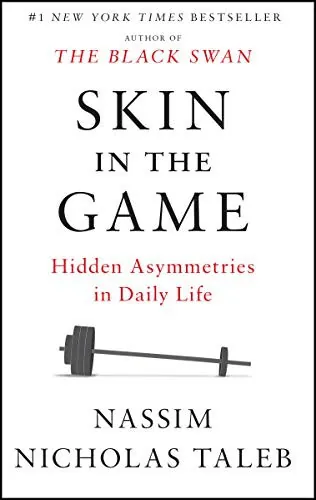
Nassim Taleb's Skin in the Game introduces the ethical-structural lens: people whose downside doesn't match their upside make worse financial decisions for themselves and worse advisors for others. The implication: be skeptical of advice from people who won't lose if they're wrong.
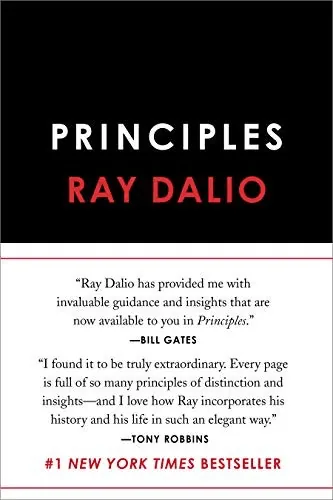
Ray Dalio's Principles: Life and Work operationalizes financial decision-making at the system level: turn investing decisions into reusable principles, audit when they fail, build a believability-weighted decision-system that decides better than your individual judgment.
Read together: money is behavior (Housel), wealth is leverage (Naval), work is theater unless it produces leverage (Ferriss), advisors are only as trustworthy as their skin in the game (Taleb), and good financial decisions come from systems not individual brilliance (Dalio).
The reading list
Each book below is a step in the topic. Tap through to chapter summaries (free, no signup) or jump straight to the full book on Amazon.
 120 chapters · 36 min
The Psychology of Money
by Morgan Housel
Foundational. 19 short stories on how money behaves in lives. Doing well with money is behavior, not math. Math is the same for everyone.
 212 chapters · 21 min
The 4-Hour Workweek
by Tim Ferriss
Time-vs-leverage angle. Most work is theater; the book is about asymmetry between time-trade work and leverage-based earnings.
 38 chapters · 13.5 min
Skin in the Game
by Nassim Nicholas Taleb
Ethical-structural lens. Advisors whose downside doesn't match their upside make worse decisions for themselves and worse advisors for others.
 434 chapters · 58 min
Principles
by Ray Dalio
System layer. Turn financial decisions into reusable principles + audit failures + build believability-weighted decision-system.
Key concepts in this topic
Tap a concept for its definition + primary book attribution. All concepts: browse the full glossary →
More topics
19 other topic clusters in the library — habits + behavior change, influence + persuasion, Stoicism + Stoic philosophy, attention + focused work, decision-making + cognitive bias, startups + business + the operator mindset, mindset + growth + grit, power + social dynamics + how the world actually works, cognition + how the mind works, leadership, creativity, psychology, communication, resilience, productivity, negotiation, career strategy, risk + uncertainty, meaning + purpose. Each has its own curated reading list with synthesis. Browse all topics →