Best books on startups + business + the operator mindset
How startups actually work — from zero to one to scale.
Listen to it free. Go deeper — many of the books on this topic are free on Audible with a trial.
Start listening freeon AudibleNew members only · many titles are included with the membership. As an Amazon Associate, Read Stacks earns from qualifying purchases and membership trials at no extra cost to you.
Most startup advice is selection bias dressed up as causation. The five books in this cluster are operator-written by people who built the thing they're describing, and they triangulate across the full lifecycle — pre-product, validation, growth, and what to do when it all gets hard.
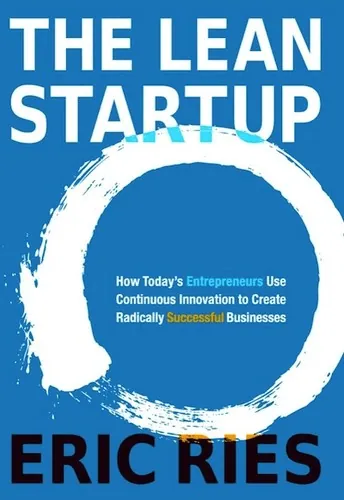
Eric Ries's The Lean Startup is the validation foundation: build-measure-learn loops, minimum viable products, validated learning. The framework solves the most common startup failure mode — building something thoroughly that nobody wanted. Ries makes it acceptable to ship ugly, measure honestly, and pivot on evidence.
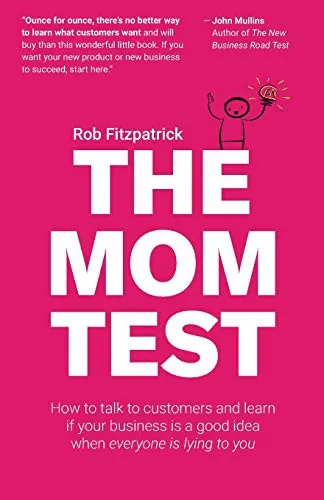
Rob Fitzpatrick's The Mom Test is the precursor to Ries: how to talk to customers without getting useless data. The Mom Test (would your mom give you accurate feedback if she didn't want to hurt your feelings? no) trains you to ask about specific past behavior rather than hypothetical future intent. Customer development without this is theater.
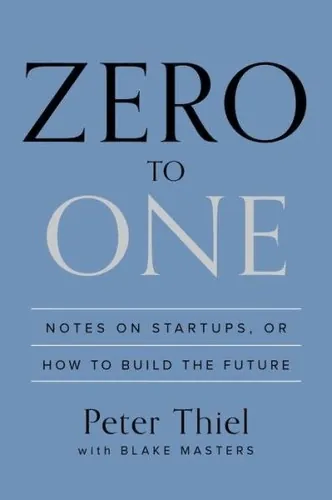
Peter Thiel's Zero to One zooms out to the strategic-bet layer: the best startups create monopolies (in fact, "competition is for losers"), and the best founders bet on contrarian truths that compound. Thiel's framework forces you to articulate WHY your startup deserves to exist — what secret are you operating on that the market hasn't caught up to?
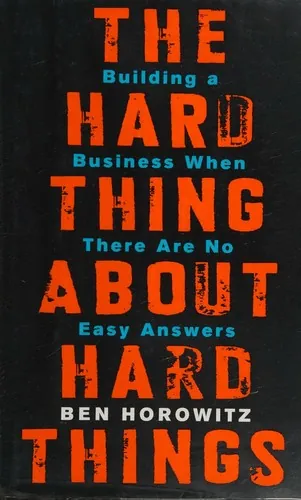
Ben Horowitz's The Hard Thing About Hard Things is the survival manual. The board meetings where you have to lay off your friends, the times you have to fire someone for incompetence + cause + nothing else, the bet-the-company decisions where everyone disagrees with you — Horowitz wrote what people don't tell you about being a CEO when it's hard.
Eric Jorgenson's The Almanack of Naval Ravikant is the philosophical bookend. Build wealth through equity, work in your unique knowledge, embrace asymmetric upside, stay rational about risk. Naval's aphoristic format makes it the book you'll re-read in fragments, which is the point — these are principles, not stories.
Read together: startups are validation systems (Fitzpatrick/Ries), bet-the-company strategy (Thiel), survival management (Horowitz), and a particular kind of asymmetric wealth-building (Ravikant). Skip any one and you're missing a leg.
The reading list
Each book below is a step in the topic. Tap through to chapter summaries (free, no signup) or jump straight to the full book on Amazon.
 17 chapters · 12.5 min
The Mom Test
by Rob Fitzpatrick
Customer development. How to talk to customers without getting useless data. The precursor to Lean Startup.
 210 chapters · 17.5 min
The Lean Startup
by Eric Ries
Validation foundation. Build-measure-learn + MVPs solve the most common failure: building something thoroughly that nobody wanted.
 310 chapters · 18 min
Zero to One
by Peter Thiel with Blake Masters
Strategic-bet layer. The best startups create monopolies. Thiel forces you to articulate why your startup deserves to exist.
 411 chapters · 20.5 min
The Hard Thing About Hard Things
by Ben Horowitz
Survival manual. What people don't tell you about being a CEO when it's hard — layoffs, fires, bet-the-company moments.
Key concepts in this topic
Tap a concept for its definition + primary book attribution. All concepts: browse the full glossary →
More topics
19 other topic clusters in the library — habits + behavior change, influence + persuasion, Stoicism + Stoic philosophy, attention + focused work, decision-making + cognitive bias, mindset + growth + grit, power + social dynamics + how the world actually works, cognition + how the mind works, money + wealth + financial behavior, leadership, creativity, psychology, communication, resilience, productivity, negotiation, career strategy, risk + uncertainty, meaning + purpose. Each has its own curated reading list with synthesis. Browse all topics →