Win the long game
Four books on the one mechanic that wins every domain that matters — and why most people quit before it kicks in.
Listen to it free. Many of these books are on Audible — hear them free with a trial.
Start listening freeon AudibleNew members only · many titles are included with the membership. As an Amazon Associate, Read Stacks earns from qualifying purchases and membership trials at no extra cost to you.
Compounding is the most underrated force in non-fiction. Small daily inputs, repeated through years and decades, produce results that look like luck from the outside. Habits compound. Skill compounds. Money compounds. Relationships compound. Opportunity-costs compound. The four books in this stack each map a different timescale of the same machine. James Clear works at the scale of days. Malcolm Gladwell works at the scale of years. Morgan Housel works at the scale of decades. Greg McKeown works at the scale of a finite life and the things you cannot get back from it. Read together, the stack is an argument that almost every domain worth playing in is a long game — and the discipline of staying in it past the boring middle is the whole sport.
The reading order
Each step below is one book. Click through to its chapter summaries — or read straight through the stack from top to bottom.
 1Step 1 · 22 chapters · 39.5 min
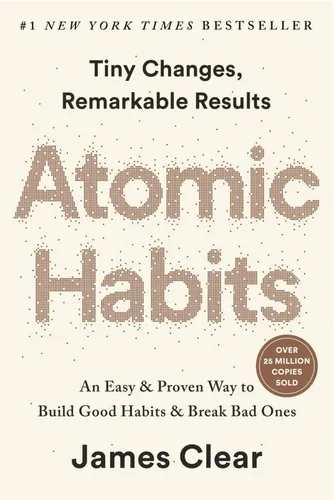
Atomic Habits
by James Clear
Start with James Clear at the smallest scale — the day. The maths he opens with (1% better daily = 37× better over a year) is the foundational claim of the entire stack: tiny, repeatable, almost-invisible inputs compound into outsized outcomes if you stay in the loop long enough. Most habit failures are quitting during the plateau of latent potential — the long flat stretch before the compounding becomes visible. Atomic Habits is the operator's manual for staying in that stretch.
 2Step 2 · 13 chapters · 20 min
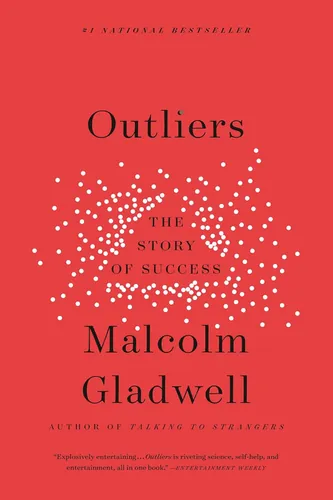
Outliers
by Malcolm Gladwell
Gladwell scales the same mechanic up to years. The famous '10,000 hours' frame is less about a magic number and more about the boring truth that mastery is the visible part of a stack of advantages plus a long stretch of unglamorous practice. Read after Atomic Habits, Outliers makes the case that the compounding mechanic in habits keeps working at the level of careers and skills — and that what people call talent is mostly accumulated repetition that nobody watched.
 3Step 3 · 20 chapters · 36 min
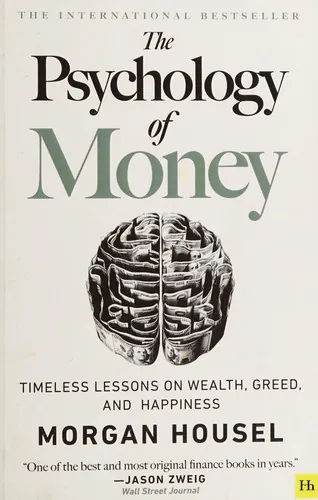
The Psychology of Money
by Morgan Housel
Housel scales the mechanic up again — to decades — and applies it to the domain where compounding is most mathematically obvious and most behaviourally hard: money. Why reasonable beats rational; why the long game wins; why the most consequential financial decisions are the ones that let compounding keep running uninterrupted. The book's deepest claim is that wealth is what you don't see — the patient capital still in the account because the holder didn't sell in 2008, or 2020, or whenever the next storm came. Same machine as Clear and Gladwell, longer time horizon.
 4Step 4 · 22 chapters · 35.5 min
Essentialism
by Greg McKeown
McKeown closes the stack at the scale that contains all the others: a finite life. If habits, skills, and wealth all compound, then the meta-question is what you choose to compound on. Every yes to the trivial is a no to the vital that you can't recover. Read after the first three, Essentialism becomes the discipline that makes the whole machine point at things worth pointing it at — and the antidote to spending a decade compounding the wrong thing.
Stack synthesis
The four books form one argument with four time horizons. Days (Clear): the smallest unit of repetition is where the machine turns on. Years (Gladwell): the units repeat past the point where most people would have quit. Decades (Housel): the patient survive long enough that the maths becomes overwhelming. A lifetime (McKeown): the question of what you let the machine work on is the only one that matters at the end. The Monday-morning move from the whole stack: pick the one habit, skill, or position you'd most want to be 10 years further along on, and identify the smallest version of it you could repeat tomorrow. Then identify three things on your week's list that are competing for that same time — and remove them. Most people don't fail at long games because they can't do the work. They fail because they never decide which long game they're playing.
Frequently asked questions
What books are in the Win the long game stack?+
The Win the long game stack has 4 books: Atomic Habits, Outliers, The Psychology of Money and Essentialism. Read them in the order listed below — each step builds on the one before it.
Who is the Win the long game stack for?+
Four books on the one mechanic that wins every domain that matters — and why most people quit before it kicks in. It's for readers who want the full argument, not just one book's take on it — the stack works because each book adds a piece the others don't cover.
How long does the Win the long game stack take to read?+
The 4 full books typically take 16+ hours combined. Read Stacks' chapter summaries cover the same stack in about 131 minutes total, so you can preview the whole path before committing to any one book.
What order should I read the Win the long game stack in?+
In this order: 1. Atomic Habits, 2. Outliers, 3. The Psychology of Money, 4. Essentialism. The sequence matters — each book's summary links back to the ones before it, so reading out of order will make some references land less clearly.
What's the big idea behind the Win the long game stack?+
The four books form one argument with four time horizons.
Adjacent stacks
From Read Stacks · Learn
Get the most out of a multi-book stack
A stack only works if the ideas stick across all the books in it. These two essays cover the retention practices and pile-management discipline that make a stack actually compound.
- I read a lot of books but can't remember anything. What works?
Forgetting most of what you read is normal, not a personal failing — your brain wasn't designed to retain prose at the rate modern readers consume it. The practices that DO work share one thing: they force you to USE the material instead of just consuming it. Six specific techniques, each tested across decades.
7 min read
- Why do I keep buying books I never finish?
Most non-fiction readers buy 5-15 books per year and finish 2-3. The pile is not laziness — it's a navigation failure. Four specific reasons the system fails and four specific fixes, including how to use curated reading stacks to avoid the bad-purchase loop.
5 min read