Think clearly
Nine books on how minds actually decide — and how to override the wiring when it matters.
Listen to it free. Many of these books are on Audible — hear them free with a trial.
Start listening freeon AudibleNew members only · many titles are included with the membership. As an Amazon Associate, Read Stacks earns from qualifying purchases and membership trials at no extra cost to you.
Most thinking errors are not stupidity. They're predictable bugs in the heuristics that let humans function fast in a complicated world. The nine books in this stack each map a different region of the bug atlas. Kahneman explains the two systems; Dalio gives a working method for principle-based decision-making; Gladwell investigates the conditions that produce mastery; Dweck shows that the belief about whether ability is fixed or grown silently shapes every learning behavior; Pink unpacks the motivation science underneath all of it; Cain widens the frame to introverted vs extroverted thinking-style as another silent variable shaping decisions; Housel applies the lot to the most error-prone domain of all — money; Epstein widens the frame to range; Ariely closes with the most concrete experimental catalog of the specific biases that the previous books have been describing at higher altitude. Read together, they form a self-defence course against your own brain.
The reading order
Each step below is one book. Click through to its chapter summaries — or read straight through the stack from top to bottom.
 1Step 1 · 38 chapters · 75.5 min
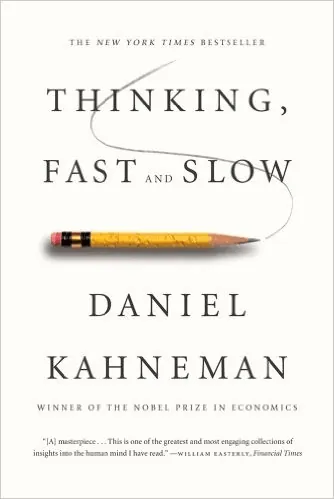
Thinking, Fast and Slow
by Daniel Kahneman
Daniel Kahneman's career-summary book is the unavoidable starting point. System 1 (fast, automatic, error-prone) versus System 2 (slow, effortful, lazy). Once you can name which system is firing, you can interrupt it — but you can only interrupt what you can see.
 2Step 2 · 34 chapters · 58 min
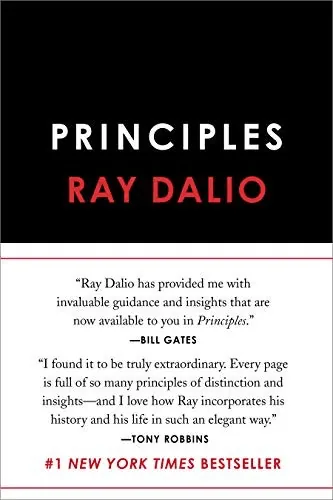
Principles
by Ray Dalio
Ray Dalio takes Kahneman's diagnostic and answers the obvious follow-up: what do you do about it? Dalio's answer — write down the principles that produced your good decisions, codify them, debate them with people who think differently — is the systematic alternative to relying on a System 2 that gets tired.
 3Step 3 · 13 chapters · 20 min
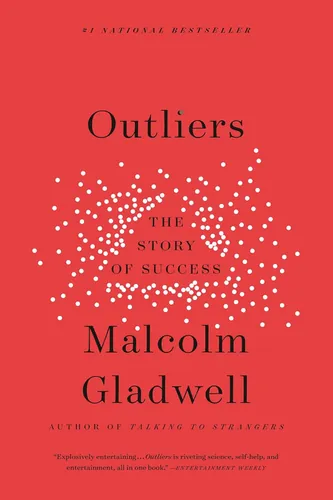
Outliers
by Malcolm Gladwell
Malcolm Gladwell breaks the myth of pure innate talent and replaces it with the more uncomfortable claim: skill is the visible part of a stack of advantages — cultural, generational, circumstantial. Reading Outliers after the first two books rewires how you think about your own decisions and the decisions you judge other people for.
 4Step 4 · 8 chapters · 14.5 min
Mindset
by Carol S. Dweck
Carol Dweck's research provides the bridge between Outliers' contextual debunking of pure talent and the practical question of what to do about it. The fixed-vs-growth mindset distinction is the single most actionable lever in this stack: most learning behaviors are downstream of the underlying belief about whether ability can grow. Read after Outliers, Mindset is the operator's manual for the talent-is-contextual claim.
 5Step 5 · 9 chapters · 16 min
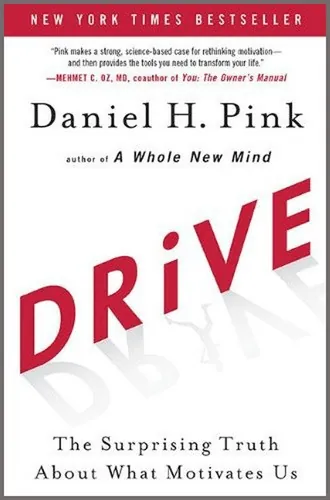
Drive
by Daniel H. Pink
Daniel Pink takes the mindset frame and answers the question Dweck implies but does not fully address: once you know ability grows, what makes you keep growing it? Pink's three-element model — autonomy, mastery, purpose — is the motivation-science complement to Dweck's mindset science. Read after Mindset, Drive explains why some people sustain growth-mindset behaviors across decades while others run out of fuel.
 6Step 6 · 9 chapters · 15.5 min
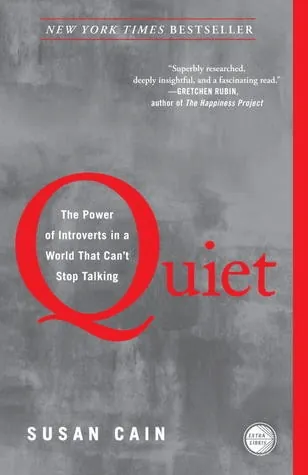
Quiet
by Susan Cain
Susan Cain widens the stack's frame from cognitive bias to thinking-style itself. Introverts and extroverts process information differently — different rates of stimulation, different patterns of reflection, different conditions for creative breakthrough. Reading Quiet after the first five books reveals that some of what looks like a 'thinking error' in research is actually a stylistic mismatch between the thinker and the environment. The fix is often environmental, not cognitive.
 7Step 7 · 20 chapters · 36 min
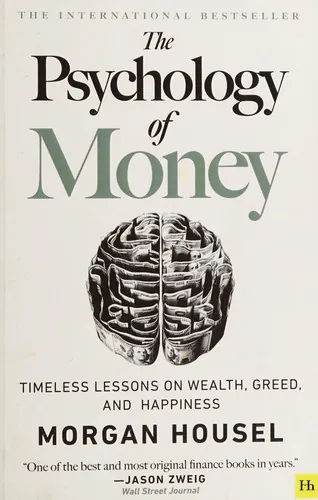
The Psychology of Money
by Morgan Housel
Morgan Housel applies everything above to the highest-stakes decisions most people make: money. Why smart people make terrible financial choices, why being reasonable beats being rational, why the long game wins. Clear thinking, growth mindset, durable motivation, and stylistic self-knowledge meet the compound interest of patient behaviour.
 8Step 8 · 10 chapters · 16.5 min
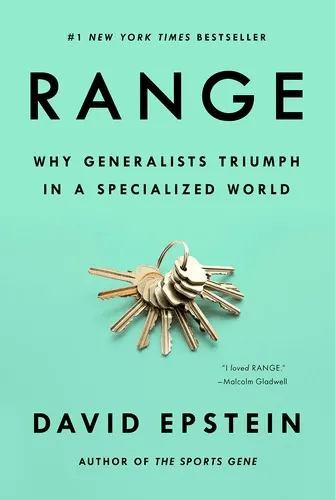
Range
by David Epstein
David Epstein widens the frame to range. Across the previous books, range — the breadth of experience drawn on — turns out to be one of the most consistently underrated predictors of good decisions. Epstein's analogical-thinking frame retroactively organizes what Kahneman, Dalio, Gladwell, Dweck, Pink, Cain, and Housel have each been arguing in their own domains: the wider your sampling, the better the patterns you have available when novel decisions arrive.
 9Step 9 · 13 chapters · 22.5 min
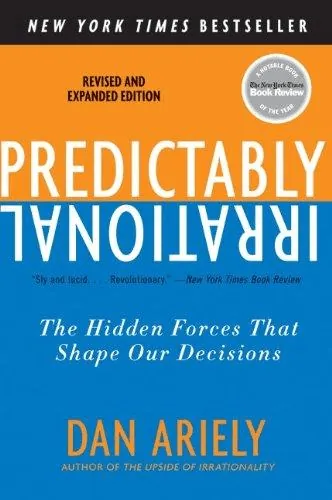
Predictably Irrational
by Dan Ariely
Dan Ariely closes the stack with the most concrete experimental catalog of the specific decision biases the previous books have been describing at higher altitude. Where Kahneman gives you System 1 vs System 2 as the conceptual frame, Ariely walks you through the specific lab experiments that document each bias: relativity in pricing, the disproportionate power of free, the destruction of social motivation by mixing in money, the unreliability of cold-state planning for hot-state behavior, ownership-based valuation distortions, optionality bias, expectation-shaped experience, price-shaped placebo, small-stakes dishonesty and its sensitivity to environmental cues. Read after the eight previous books, Predictably Irrational is the lab notebook that grounds the rest of the stack — and the chapter on procrastination and self-control is the bridge that ties the cognitive-bias literature to the habit-design literature in the next stack over.
Stack synthesis
The nine books converge on a single discipline: build systems that compensate for the limits of your in-the-moment brain. Kahneman shows you the brain is unreliable. Dalio shows you to externalize the rules into written principles. Gladwell shows you context shapes outcome more than you'd like to admit. Dweck shows you the belief about whether ability is fixed silently shapes every learning behavior. Pink shows you what fuels growth-mindset behavior across decades — autonomy, mastery, purpose. Cain shows you that some of what looks like an error is a stylistic mismatch between thinker and environment. Housel shows you that even with all this, the highest-stakes domains will still tempt you to break your own rules. Epstein shows you that range — the breadth of experience you bring to novel problems — is the meta-skill that makes the other seven decisive. Ariely closes by handing you the lab notebook: the specific experimental evidence behind each bias, demonstrating that the irrationality is not random but predictably patterned, which is what makes engineering around it possible. The stack's Monday-morning move: write down the three financial, career, or life rules you'd want to follow when your judgement is compromised — then make those rules impossible to ignore in the moments they matter, using whichever specific bias from Ariely's catalog applies to your situation (precommitment for procrastination, blind comparison for price-shaped experience, removing optionality where the optionality is psychologically expensive, signing an honor commitment in the moment before the small-stakes-dishonesty opportunity arrives). The whole stack is one extended argument that decisions made coolly in advance beat decisions made hotly in the moment, every time — and Ariely gives you the specific experimental evidence to back the claim.
Frequently asked questions
What books are in the Think clearly stack?+
The Think clearly stack has 9 books: Thinking, Fast and Slow, Principles, Outliers, Mindset, Drive, Quiet, The Psychology of Money, Range and Predictably Irrational. Read them in the order listed below — each step builds on the one before it.
Who is the Think clearly stack for?+
Nine books on how minds actually decide — and how to override the wiring when it matters. It's for readers who want the full argument, not just one book's take on it — the stack works because each book adds a piece the others don't cover.
How long does the Think clearly stack take to read?+
The 9 full books typically take 36+ hours combined. Read Stacks' chapter summaries cover the same stack in about 274.5 minutes total, so you can preview the whole path before committing to any one book.
What order should I read the Think clearly stack in?+
In this order: 1. Thinking, Fast and Slow, 2. Principles, 3. Outliers, 4. Mindset, 5. Drive, 6. Quiet, 7. The Psychology of Money, 8. Range, 9. Predictably Irrational. The sequence matters — each book's summary links back to the ones before it, so reading out of order will make some references land less clearly.
What's the big idea behind the Think clearly stack?+
The nine books converge on a single discipline: build systems that compensate for the limits of your in-the-moment brain.
Adjacent stacks
From Read Stacks · Learn
Get the most out of a multi-book stack
A stack only works if the ideas stick across all the books in it. These two essays cover the retention practices and pile-management discipline that make a stack actually compound.
- I read a lot of books but can't remember anything. What works?
Forgetting most of what you read is normal, not a personal failing — your brain wasn't designed to retain prose at the rate modern readers consume it. The practices that DO work share one thing: they force you to USE the material instead of just consuming it. Six specific techniques, each tested across decades.
7 min read
- Why do I keep buying books I never finish?
Most non-fiction readers buy 5-15 books per year and finish 2-3. The pile is not laziness — it's a navigation failure. Four specific reasons the system fails and four specific fixes, including how to use curated reading stacks to avoid the bad-purchase loop.
5 min read