Build better habits
Eight books on how behaviour actually changes — and what to do when motivation runs out.
Listen to it free. Many of these books are on Audible — hear them free with a trial.
Start listening freeon AudibleNew members only · many titles are included with the membership. As an Amazon Associate, Read Stacks earns from qualifying purchases and membership trials at no extra cost to you.
Motivation gets you started. Systems keep you going. The eight books in this stack approach behaviour change from different angles — character, neuroscience, behavioural psychology, productivity philosophy, the disciplined art of saying no, gritty perseverance, the career-capital frame for what to apply all this discipline toward, and finally the deliberate-practice research that explains how disciplined effort actually translates into skill — but they converge on the same conclusion: identity is downstream of habit, and habit is downstream of environment, and skill is downstream of the specific kind of practice the habit produces. If you've read any one in isolation, the others will sharpen what you took away. Read them in the order below and you'll move from the character work that makes any habit stick, to engineering it, to defending the time it needs to compound, to deploying the accumulated capability as career leverage, to understanding the research on what kind of practice actually builds expertise inside that disciplined time.
The reading order
Each step below is one book. Click through to its chapter summaries — or read straight through the stack from top to bottom.
 1Step 1 · 10 chapters · 17 min
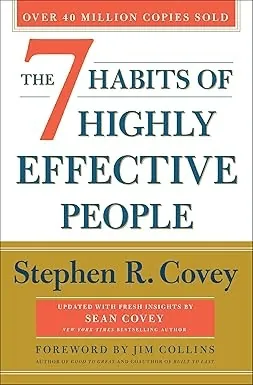
The 7 Habits of Highly Effective People
by Stephen R. Covey
Start with Stephen Covey's classical foundation: habits are descriptions of underlying character, not techniques. The seven habits move inside-out from private victory (proactivity, ends-first, priorities) through public victory (Win/Win, listening-first, synergy) to renewal. Reading Covey first means the more tactical books that follow get installed on top of a character base that can actually hold them.
 2Step 2 · 13 chapters · 20 min
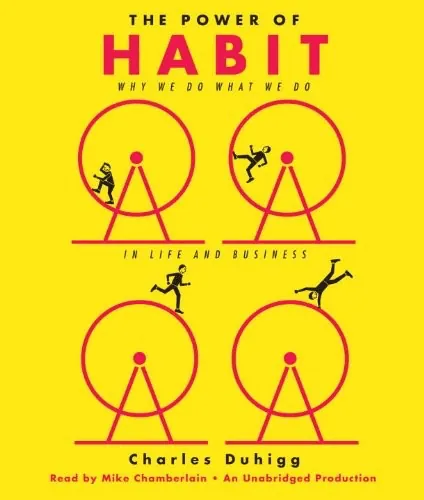
The Power of Habit
by Charles Duhigg
Charles Duhigg's foundational frame: the cue-routine-reward loop. Once you can see the loop in your own behaviour — the trigger that fires the automatic response — every habit becomes legible. This is the diagnostic layer before the engineering layer.
 3Step 3 · 22 chapters · 39.5 min
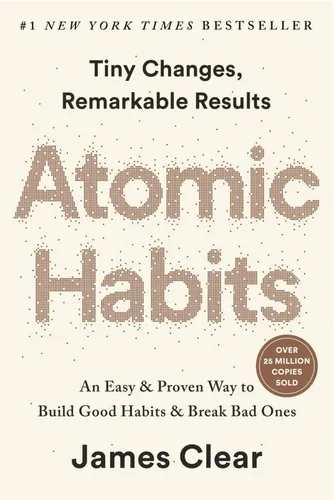
Atomic Habits
by James Clear
James Clear takes Duhigg's loop and turns it into a build manual. The four laws of behaviour change (cue obvious, routine attractive, response easy, reward satisfying) are the operating instructions. This is where habit theory becomes Monday-morning actionable.
 4Step 4 · 9 chapters · 16 min
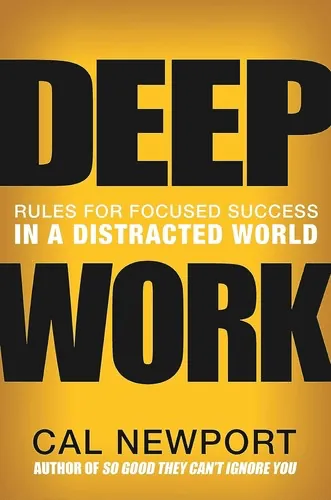
Deep Work
by Cal Newport
Cal Newport zooms out from individual habits to the cognitive habit of sustained attention. The argument: in an economy that rewards what cannot be copied, the ability to focus without distraction is itself the master habit. Without it, the small wins from the previous books leak.
 5Step 5 · 22 chapters · 35.5 min
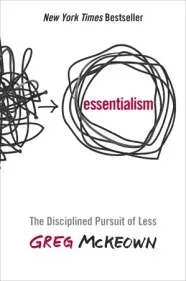
Essentialism
by Greg McKeown
Greg McKeown answers the question habits alone can't: which habits, on which goals? The discipline of pursuing less, but better. Once you can build any habit you want, the constraint becomes choosing which ones deserve your finite attention.
 6Step 6 · 10 chapters · 17 min
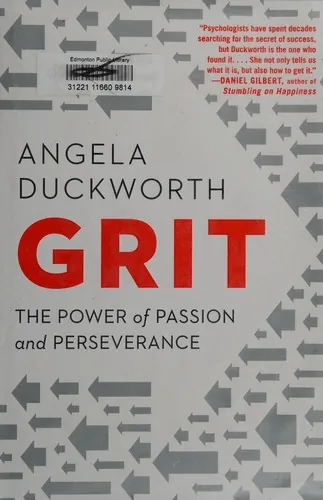
Grit
by Angela Duckworth
Angela Duckworth answers the long-game question the previous books leave open: what makes the disciplined habits and the careful selection survive across years? Grit — passion plus perseverance applied to long-term goals — is the durable disposition that turns short-term behavior change into a life-long compounding curve. Read after McKeown's selection discipline, Duckworth shows why some people's selected habits compound across decades while others' fade within months.
 7Step 7 · 8 chapters · 13.5 min
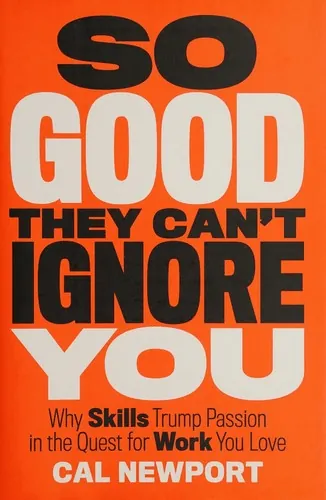
So Good They Can't Ignore You
by Cal Newport
Cal Newport adds the career application of everything above. Habit + character + grit produces career capital — the rare and valuable skills that the market actually rewards. Newport's craftsman-mindset frame answers what to direct all the disciplined habit-building toward: building leverage you can later spend on the autonomy, mission, and conditions that the passion-script wished you could demand directly.
 8Step 8 · 9 chapters · 16 min
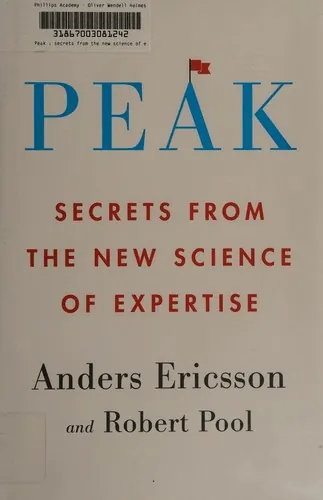
Peak
by Anders Ericsson & Robert Pool
Anders Ericsson closes the stack with the research that explains how disciplined effort actually translates into skill. Deliberate practice — specific goals, focused attention, immediate feedback, working at the edge of current capability — is the structural pattern underneath everything Newport, Duckworth, and the earlier books in the stack describe. Read after the previous seven, Peak retroactively organizes the entire stack: the habits, the character, the focus, the grit, the career capital all compound only when the underlying practice has the four properties Ericsson identifies. Without those properties, decades of disciplined repetition produce no improvement past basic competence; with them, sustained practice produces the expert performance the stack has been pointing at the entire time.
Stack synthesis
Read these eight in order and a pattern emerges: behaviour change is not a willpower problem. It's a character problem (Covey), a diagnosis problem (Duhigg), an engineering problem (Clear), an attention problem (Newport on focus), a selection problem (McKeown), a perseverance problem (Duckworth), a career-capital problem (Newport on so-good-they-cant-ignore-you), and finally a practice-quality problem (Ericsson). The stack's deepest argument is that motivation is unreliable but design — character design, environment design, calendar design, gritty perseverance, the deliberate accumulation of rare-and-valuable skills, and the specific four-property practice that turns those skills into expert performance — is durable. The 'do this on Monday' move from the whole stack: pick ONE habit aligned with a rare-and-valuable skill you want to build, write down the principle it expresses (Covey), identify its cue (Duhigg), make the next step laughably easy (Clear), protect a 90-minute window for it on your calendar (Deep Work), remove three things from your week to make room (McKeown), commit to returning to it for at least a year, especially when it stops feeling new (Duckworth), treat the accumulated skill as career capital to be deployed later (So Good), and engineer the practice inside that 90-minute window so it has specific goals, focused attention, immediate feedback, and operates at the edge of your current capability (Ericsson). Without the last component, the first seven produce disciplined repetition without skill growth. With it, the stack compounds.
Frequently asked questions
What books are in the Build better habits stack?+
The Build better habits stack has 8 books: The 7 Habits of Highly Effective People, The Power of Habit, Atomic Habits, Deep Work, Essentialism, Grit, So Good They Can't Ignore You and Peak. Read them in the order listed below — each step builds on the one before it.
Who is the Build better habits stack for?+
Eight books on how behaviour actually changes — and what to do when motivation runs out. It's for readers who want the full argument, not just one book's take on it — the stack works because each book adds a piece the others don't cover.
How long does the Build better habits stack take to read?+
The 8 full books typically take 32+ hours combined. Read Stacks' chapter summaries cover the same stack in about 174.5 minutes total, so you can preview the whole path before committing to any one book.
What order should I read the Build better habits stack in?+
In this order: 1. The 7 Habits of Highly Effective People, 2. The Power of Habit, 3. Atomic Habits, 4. Deep Work, 5. Essentialism, 6. Grit, 7. So Good They Can't Ignore You, 8. Peak. The sequence matters — each book's summary links back to the ones before it, so reading out of order will make some references land less clearly.
What's the big idea behind the Build better habits stack?+
Read these eight in order and a pattern emerges: behaviour change is not a willpower problem.
Adjacent stacks
From Read Stacks · Learn
Get the most out of a multi-book stack
A stack only works if the ideas stick across all the books in it. These two essays cover the retention practices and pile-management discipline that make a stack actually compound.
- I read a lot of books but can't remember anything. What works?
Forgetting most of what you read is normal, not a personal failing — your brain wasn't designed to retain prose at the rate modern readers consume it. The practices that DO work share one thing: they force you to USE the material instead of just consuming it. Six specific techniques, each tested across decades.
7 min read
- Why do I keep buying books I never finish?
Most non-fiction readers buy 5-15 books per year and finish 2-3. The pile is not laziness — it's a navigation failure. Four specific reasons the system fails and four specific fixes, including how to use curated reading stacks to avoid the bad-purchase loop.
5 min read