Find meaning
Nine books on what makes a life feel like it counted — read in the order that builds the argument.
Listen to it free. Many of these books are on Audible — hear them free with a trial.
Start listening freeon AudibleNew members only · many titles are included with the membership. As an Amazon Associate, Read Stacks earns from qualifying purchases and membership trials at no extra cost to you.
The hardest question in any non-fiction library is not 'how do I succeed' but 'what would even count as success.' This stack treats that question seriously. Marcus Aurelius writes from a Roman military camp in 170 AD about composure, duty, and the brevity of life. Ryan Holiday operationalizes Marcus's three Stoic disciplines for the modern obstacle. Viktor Frankl writes from inside Auschwitz about meaning under conditions where everything else is stripped away. Kishimi and Koga translate Alfred Adler's philosophy into a Socratic dialogue about choosing your life. Yuval Noah Harari zooms out to ask how humans constructed meaning systems across 200,000 years. Greg McKeown returns to the individual scale: what to actually do, this week, when meaning becomes the constraint. Sebastian Junger adds the missing social half — the tribal conditions humans need that modernity has suppressed. Ryan Holiday returns at the end with the most underrated chapter of any meaning project: the discipline of keeping ego — the unhealthy belief in your own importance — out of the way of the work that would otherwise make a life count. Read in this order, the stack doesn't deliver answers — it sharpens the question until your own answers become unavoidable.
The reading order
Each step below is one book. Click through to its chapter summaries — or read straight through the stack from top to bottom.
 1Step 1 · 12 chapters · 20.5 min
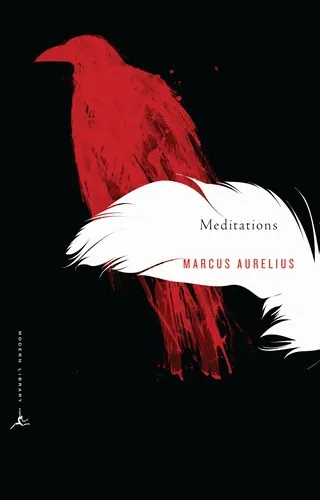
Meditations
by Marcus Aurelius
Marcus Aurelius is the foundational layer — the Roman emperor's private journal, written in field tents during war, has survived nineteen centuries because it is the most-honest sustained Stoic practice ever written. Read first, it sets the philosophical voice the rest of the stack inherits: accept change, control your judgments, do your duty, hold your composure, remember you will die. Everything written since is footnotes on Marcus's morning notes to himself.
 2Step 2 · 8 chapters · 14 min
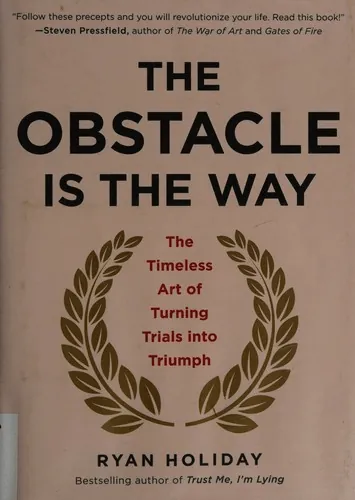
The Obstacle Is the Way
by Ryan Holiday
Ryan Holiday takes Marcus's three Stoic disciplines (perception, action, will) and translates them into a modern operating manual. Where Meditations is the philosophy in aphorisms, Obstacle is the application in sequences — how to choose your perception of a setback, how to act decisively inside it, how to bear what cannot be changed. Read second, it makes Marcus's abstract frame concretely usable for ordinary contemporary problems.
 3Step 3 · 24 chapters · 41.5 min
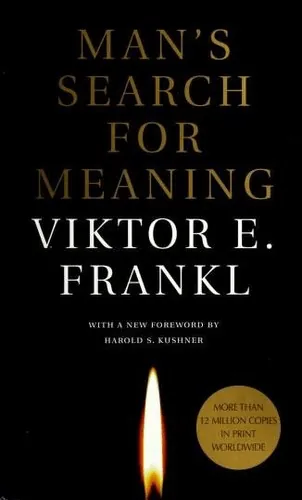
Man’s Search for Meaning
by Viktor E. Frankl
Frankl's account of surviving the concentration camps is where the Stoic frame meets the modern century's worst-case test. His logotherapy argument — that meaning is found, not given, and that the orientation toward meaning is what humans need most — is the philosophical bedrock the rest of the stack stands on. Read after Marcus and Holiday, Frankl is the proof that the ancient discipline holds even at the breaking point.
 4Step 4 · 6 chapters · 11 min
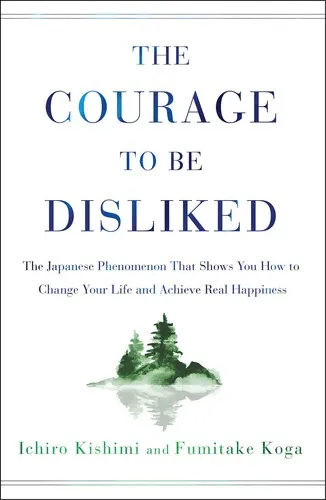
The Courage to Be Disliked
by Ichiro Kishimi & Fumitake Koga
Where Frankl writes from inside the limit case, Kishimi and Koga apply Adlerian psychology to ordinary life — the dialogue between a young man and a philosopher walks through the most uncomfortable claims of goal-oriented thinking. Trauma does not determine you, all problems are relationship problems, and the meaning you find comes from contributing rather than from being seen. Read after Frankl, it makes the philosophical foundation operational for everyday situations.
 5Step 5 · 21 chapters · 36 min
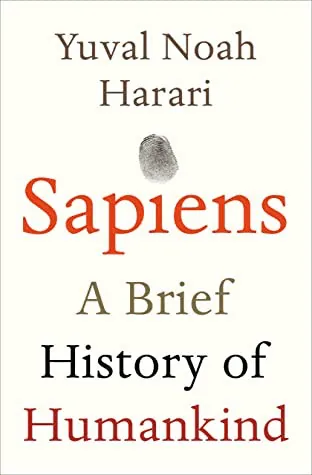
Sapiens
by Yuval Noah Harari
Yuval Noah Harari zooms out from the individual to the species. The argument: humans built civilisation by inventing shared fictions — religion, money, nation, corporation — and those fictions are simultaneously what we live for and what we sometimes ought to question. Reading Sapiens after the first four books recontextualizes individual meaning inside the meaning-making machinery of humanity.
 6Step 6 · 16 chapters · 22 min
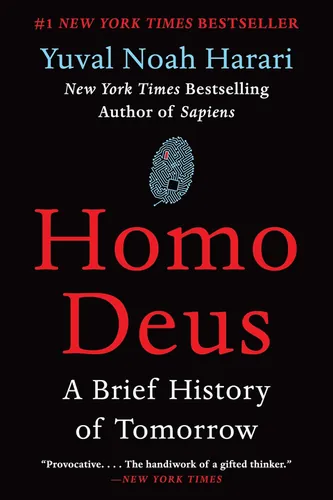
Homo Deus
by Yuval Noah Harari
Harari's sequel asks the uncomfortable forward-looking question: if humans have spent the last few centuries fighting hunger, plague, and war, what becomes the project when those are mostly solved? Homo Deus reframes meaning as a problem the next century will have to actively design, not assume.
 7Step 7 · 22 chapters · 35.5 min
Essentialism
by Greg McKeown
Greg McKeown brings the philosophical zoom-out back to the individual scale and the one practical move that comes out of all this reading: less but better. The disciplined pursuit of the few things you'd want to be remembered for, and the disciplined refusal of the rest. After six books of philosophical zoom-out, McKeown is the operator's manual for next Monday.
 8Step 8 · 4 chapters · 7 min
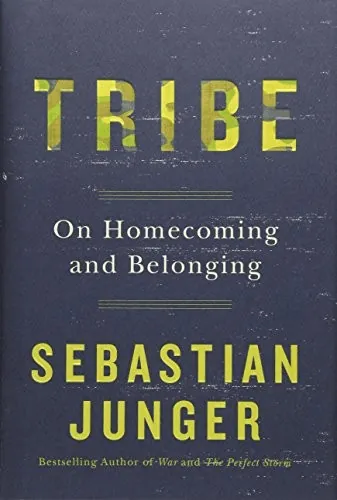
Tribe
by Sebastian Junger
Sebastian Junger adds the dimension the philosophical books mostly leave implicit: humans are tribal animals, and the meaning we are looking for is often the tribal conditions modernity has eliminated as a side effect of producing material wealth. Junger's argument — that small groups doing meaningful shared work, rituals of return, and proximity in real difficulty are the structural inputs to a felt sense of mattering — gives the find-meaning project its missing social half.
 9Step 9 · 9 chapters · 16.5 min
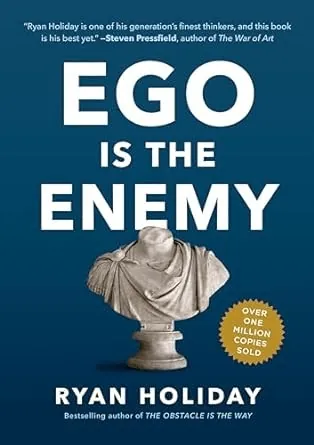
Ego Is the Enemy
by Ryan Holiday
Ryan Holiday returns at the end of the stack with the most underrated obstacle to meaning: ego, the unhealthy belief in one's own importance, which sabotages aspiring careers, corrupts successful ones, and breaks falling ones in distinct stage-specific ways. Where Marcus argues for composure, Holiday names the specific psychological pattern that erodes it across an actual career arc. Reading Ego after the philosophical and social books grounds the find-meaning project in the one operating discipline that determines whether the rest of the stack lands: keep ego out of the way, and the meaning is recoverable from work; let ego in, and even the best philosophical foundation eventually fails.
Stack synthesis
These nine books form an argument that moves from a Roman emperor writing to himself in a frontier camp (Marcus), to the modern operationalization of his three disciplines for ordinary obstacles (Holiday's Obstacle), to the individual prisoner staring at a guard tower (Frankl), to the ordinary person reasoning their way out of inherited stories (Kishimi & Koga), to the species inventing money and gods (Harari I), to the species facing its own success (Harari II), to the individual choosing what to spend the week on (McKeown), to the social-structural conditions humans need that modern affluence has suppressed (Junger), and finally to the one internal discipline that determines whether all the philosophical and social work lands — keeping ego out of the way (Holiday's Ego). The stack's deepest claim: meaning is not a feeling you wait for; it's a function of where you direct attention over long stretches of time, the social conditions you participate in, AND the ego-discipline that determines whether you can absorb success and survive failure without losing the thread. Marcus said it in 170 AD. Holiday translates it twice — once for the modern Monday's obstacle, once for the modern Monday's ego. Frankl, Kishimi & Koga, Harari, McKeown, Junger fill in the philosophical, individual, historical, practical, and social layers. Read all nine and the question is no longer 'what is the meaning of life' but 'what am I going to do about it this quarter, who am I going to do it alongside, and how am I going to keep my ego from sabotaging it.'
Frequently asked questions
What books are in the Find meaning stack?+
The Find meaning stack has 9 books: Meditations, The Obstacle Is the Way, Man’s Search for Meaning, The Courage to Be Disliked, Sapiens, Homo Deus, Essentialism, Tribe and Ego Is the Enemy. Read them in the order listed below — each step builds on the one before it.
Who is the Find meaning stack for?+
Nine books on what makes a life feel like it counted — read in the order that builds the argument. It's for readers who want the full argument, not just one book's take on it — the stack works because each book adds a piece the others don't cover.
How long does the Find meaning stack take to read?+
The 9 full books typically take 36+ hours combined. Read Stacks' chapter summaries cover the same stack in about 204 minutes total, so you can preview the whole path before committing to any one book.
What order should I read the Find meaning stack in?+
In this order: 1. Meditations, 2. The Obstacle Is the Way, 3. Man’s Search for Meaning, 4. The Courage to Be Disliked, 5. Sapiens, 6. Homo Deus, 7. Essentialism, 8. Tribe, 9. Ego Is the Enemy. The sequence matters — each book's summary links back to the ones before it, so reading out of order will make some references land less clearly.
What's the big idea behind the Find meaning stack?+
The 9 books — Marcus Aurelius, Ryan Holiday, Viktor E. Frankl, Ichiro Kishimi & Fumitake Koga, Yuval Noah Harari, Greg McKeown and Sebastian Junger — are sequenced as one continuous argument rather than a reading list. The stack synthesis on this page works through how each book hands off to the next.
Adjacent stacks
From Read Stacks · Learn
Get the most out of a multi-book stack
A stack only works if the ideas stick across all the books in it. These two essays cover the retention practices and pile-management discipline that make a stack actually compound.
- I read a lot of books but can't remember anything. What works?
Forgetting most of what you read is normal, not a personal failing — your brain wasn't designed to retain prose at the rate modern readers consume it. The practices that DO work share one thing: they force you to USE the material instead of just consuming it. Six specific techniques, each tested across decades.
7 min read
- Why do I keep buying books I never finish?
Most non-fiction readers buy 5-15 books per year and finish 2-3. The pile is not laziness — it's a navigation failure. Four specific reasons the system fails and four specific fixes, including how to use curated reading stacks to avoid the bad-purchase loop.
5 min read