Best books on decision-making + cognitive bias
How to make better decisions when your brain is wired against you.
Listen to it free. Go deeper — many of the books on this topic are free on Audible with a trial.
Start listening freeon AudibleNew members only · many titles are included with the membership. As an Amazon Associate, Read Stacks earns from qualifying purchases and membership trials at no extra cost to you.
The decision-making literature would be unnecessary if your brain made decisions the way you think it does. The five books in this cluster show — from different angles — that the intuitive picture is wrong, and that better decisions require understanding where the wiring fails.
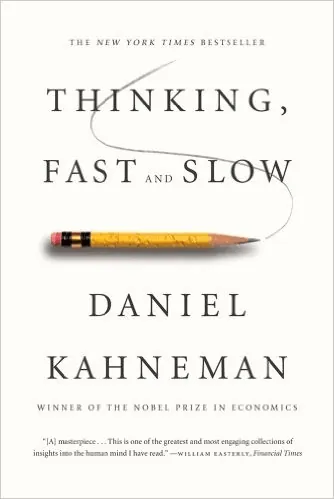
Daniel Kahneman's Thinking, Fast and Slow is the foundational text — System 1 (fast, automatic, error-prone) vs. System 2 (slow, deliberate, lazy). The framework explains why we mistake confidence for accuracy, why we substitute easy questions for hard ones, and why we're systematically overconfident about our predictions. Without this baseline, nothing else in the cluster makes sense.
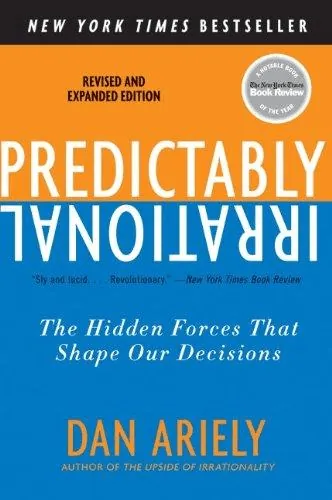
Dan Ariely's Predictably Irrational runs the experiments. Anchoring, decoy pricing, the IKEA effect, why "free!" warps comparison — each chapter is an experiment with a sharp result that updates how you'd design a survey, set a price, or read your own choices.
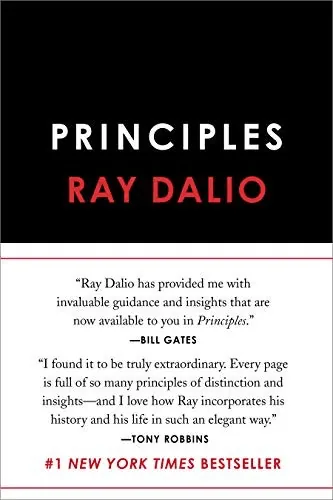
Ray Dalio's Principles: Life and Work operationalizes decision-making at the company-and-team level. The radical-transparency + believability-weighted-voting framework + Idea Meritocracy are Dalio's bet that you can build a system that decides better than its smartest individual. Whether or not you adopt the system, the meta-insight — turn your decisions into reusable principles, then audit when they fail — is profound.
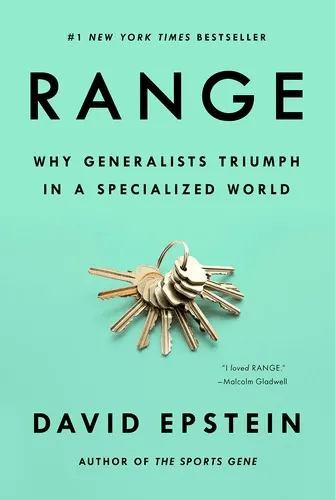
David Epstein's Range counter-argues against early specialization: in complex domains (most of them), generalists who can map across fields beat specialists who can drill deeper. The decision-making implication: variety of experience builds the analogies that let you recognize when a current situation rhymes with a past one you've seen.
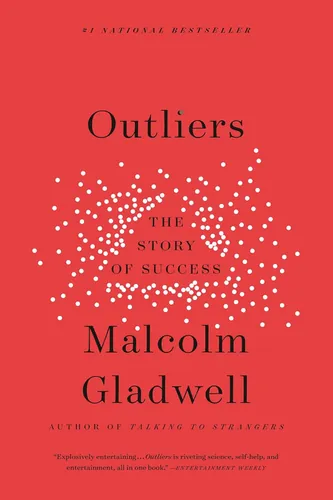
Malcolm Gladwell's Outliers widens the lens to context. Talent + practice + circumstance + culture — outcomes emerge from the interaction, not from any single factor. The book pairs with Range as a corrective to "10,000 hours" mythology that ignores luck and the windows where work matters most.
Read together: better decisions require seeing where the wiring fails (Kahneman/Ariely), building systems that catch your errors (Dalio), broadening the input set (Epstein), and accepting that outcomes depend on more than you control (Gladwell).
The reading list
Each book below is a step in the topic. Tap through to chapter summaries (free, no signup) or jump straight to the full book on Amazon.
 138 chapters · 75.5 min
Thinking, Fast and Slow
by Daniel Kahneman
Foundational. System 1 vs System 2 framework — without this baseline, nothing else in cognitive science makes sense.
 213 chapters · 22.5 min
Predictably Irrational
by Dan Ariely
Runs the experiments. Each chapter is an experiment with a sharp result — anchoring, decoy pricing, the IKEA effect, the cost of 'free'.
 334 chapters · 58 min
Principles
by Ray Dalio
Operationalizes at company scale. Turn decisions into reusable principles, audit when they fail. Whether you adopt Dalio's system or not, the meta-insight matters.
 410 chapters · 16.5 min
Range
by David Epstein
Counter-argues early specialization. In complex domains, generalists who map across fields beat specialists who drill deeper.
 513 chapters · 20 min
Outliers
by Malcolm Gladwell
Widens the lens. Outcomes emerge from talent + practice + circumstance + culture interacting — corrective to '10,000 hours' mythology.
Key concepts in this topic
Tap a concept for its definition + primary book attribution. All concepts: browse the full glossary →
More topics
19 other topic clusters in the library — habits + behavior change, influence + persuasion, Stoicism + Stoic philosophy, attention + focused work, startups + business + the operator mindset, mindset + growth + grit, power + social dynamics + how the world actually works, cognition + how the mind works, money + wealth + financial behavior, leadership, creativity, psychology, communication, resilience, productivity, negotiation, career strategy, risk + uncertainty, meaning + purpose. Each has its own curated reading list with synthesis. Browse all topics →