Best books on career strategy
Don't follow your passion — build rare skills, pick the right race, and let compounding do the rest.
Listen to it free. Go deeper — many of the books on this topic are free on Audible with a trial.
Start listening freeon AudibleNew members only · many titles are included with the membership. As an Amazon Associate, Read Stacks earns from qualifying purchases and membership trials at no extra cost to you.
The default career advice — follow your passion, specialize early, work harder than everyone — is contradicted by most of the serious research. The six books here replace it with something more testable.
Cal Newport's So Good They Can't Ignore You is the thesis statement: passion follows mastery, not the other way around. Careers compound through "career capital" — rare and valuable skills — which you then trade for autonomy and mission. The passion mindset asks what the world offers you; the craftsman mindset asks what you offer the world.
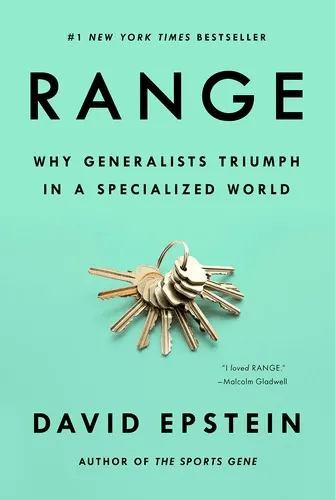
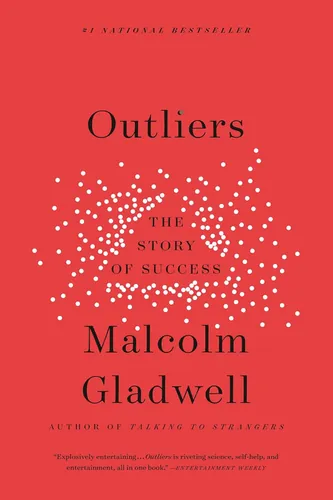
David Epstein's Range corrects the specialize-early dogma: in complex, changing fields ("wicked" learning environments), generalists win. Sampling widely before committing isn't falling behind — it's how you find the match quality that later looks like destiny. Malcolm Gladwell's Outliers adds the uncomfortable structural truth: talent is real but opportunity is distributed unevenly, and timing, cohort, and accumulated advantage explain more than raw ability. Knowing this changes how you pick arenas.
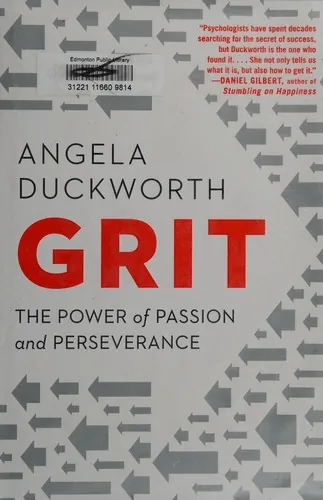
Angela Duckworth's Grit supplies the persistence variable — sustained passion plus perseverance toward a top-level goal beats talent in almost every longitudinal study she ran — while Greg McKeown's Essentialism supplies the filter: if you don't prioritize your career, someone else will, and the disciplined pursuit of less is what makes compounding possible at all.
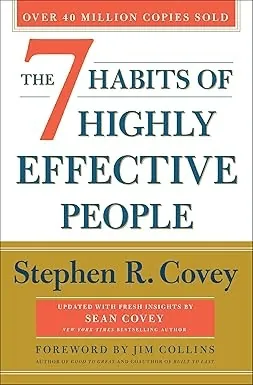
Stephen Covey's The 7 Habits of Highly Effective People frames the whole game: begin with the end in mind, put first things first, and operate inside your circle of influence. Read together, the cluster gives you an operating system — sample wide (Epstein), pick arenas where the structure favors you (Gladwell), go deep on rare skills (Newport), persist (Duckworth), cut everything else (McKeown), and steer by principles (Covey).
The reading list
Each book below is a step in the topic. Tap through to chapter summaries (free, no signup) or jump straight to the full book on Amazon.
 110 chapters · 16.5 min
Range
by David Epstein
The specialize-early correction. In complex fields, wide sampling before committing produces better match quality — and better careers.
 213 chapters · 20 min
Outliers
by Malcolm Gladwell
The structural truth. Timing, cohort, and accumulated advantage explain more than talent — so pick your arenas deliberately.
 310 chapters · 17 min
Grit
by Angela Duckworth
The persistence variable. Sustained passion + perseverance toward one top-level goal beats talent in the longitudinal data.
 422 chapters · 35.5 min
Essentialism
by Greg McKeown
The filter. If you don't prioritize your career, someone else will — less-but-better is what makes compounding possible.
 510 chapters · 17 min
The 7 Habits of Highly Effective People
by Stephen R. Covey
The operating system. Begin with the end in mind, put first things first, work your circle of influence.
Key concepts in this topic
Tap a concept for its definition + primary book attribution. All concepts: browse the full glossary →
More topics
19 other topic clusters in the library — habits + behavior change, influence + persuasion, Stoicism + Stoic philosophy, attention + focused work, decision-making + cognitive bias, startups + business + the operator mindset, mindset + growth + grit, power + social dynamics + how the world actually works, cognition + how the mind works, money + wealth + financial behavior, leadership, creativity, psychology, communication, resilience, productivity, negotiation, risk + uncertainty, meaning + purpose. Each has its own curated reading list with synthesis. Browse all topics →