Best books on attention + focused work
Why attention is the foundational skill of the 21st century — and how to actually train it.
Listen to it free. Go deeper — many of the books on this topic are free on Audible with a trial.
Start listening freeon AudibleNew members only · many titles are included with the membership. As an Amazon Associate, Read Stacks earns from qualifying purchases and membership trials at no extra cost to you.
Attention is the foundational skill because nothing else compounds without it. The five books in this cluster argue from different angles but converge on the same conclusion: in a world engineered to fragment attention, the ability to focus is increasingly the difference between flourishing and treading water.
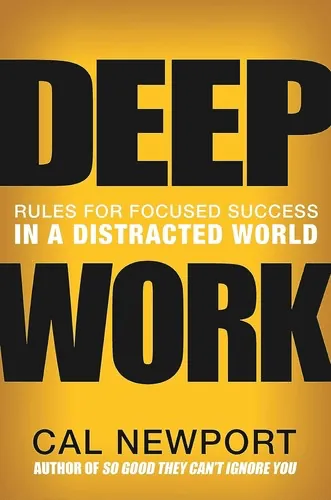
Cal Newport's Deep Work is the anchor: deep work (cognitively demanding tasks done without distraction) is both more valuable and rarer than ever, which is exactly why it's high-leverage. Newport's four rules (work deeply, embrace boredom, quit social media, drain the shallows) form the practical core.
Greg McKeown's Essentialism zooms out to the strategy level: it's not about doing more; it's about doing less, better. The discipline of trade-offs — what you say no to defines what you can say yes to — is the prerequisite for Deep Work's attention rules to mean anything.
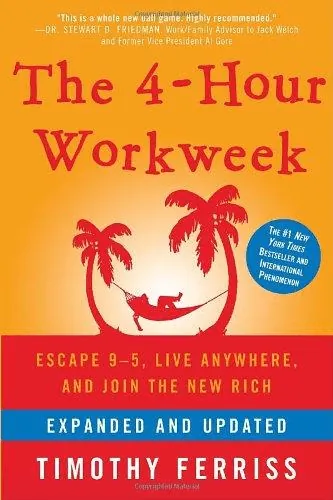
Tim Ferriss's The 4-Hour Workweek attacks the same problem from the economic angle: most knowledge work is theater. Eliminate, automate, then delegate; what's left is the small fraction that actually moves the needle. Ferriss is the gateway drug to seeing how much of "work" is performative attention-spending.
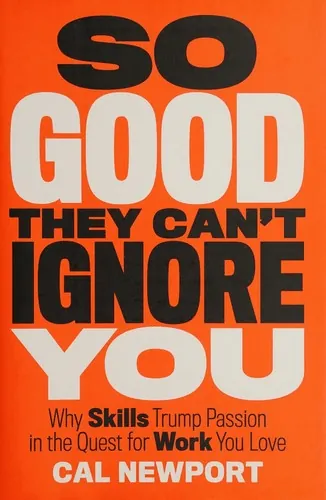
Cal Newport's So Good They Can't Ignore You counter-argues against "follow your passion": rare and valuable skills (career capital) compound over years of deliberate practice, and passion follows skill, not the reverse. The implication: spend your deep work on building career capital, not chasing the next shiny thing.
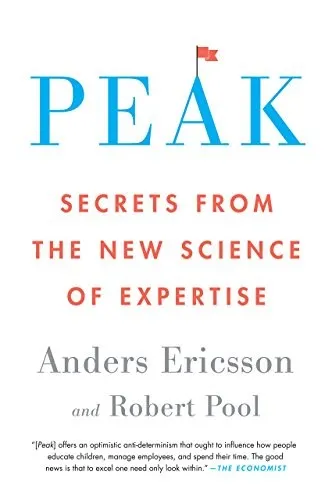
Anders Ericsson's Peak closes the loop on what "doing deep work" actually means at the technical level — deliberate practice is the specific kind of focused effort that produces compounding skill. Most focus is low-engagement repetition; deliberate practice is the structured push past current ability that makes the focus pay off.
Read together: attention training isn't a wellness practice — it's economic. The skill of holding attention on one hard thing long enough to push it forward is what produces the rare and valuable work that compounds.
The reading list
Each book below is a step in the topic. Tap through to chapter summaries (free, no signup) or jump straight to the full book on Amazon.
 19 chapters · 16 min
Deep Work
by Cal Newport
The anchor. Deep work is both more valuable and rarer than ever. Four rules form the practical core for training focused attention.
 222 chapters · 35.5 min
Essentialism
by Greg McKeown
Strategy layer. It's not about doing more; it's about doing less, better. Trade-off discipline is the prerequisite for Deep Work's rules.
 312 chapters · 21 min
The 4-Hour Workweek
by Tim Ferriss
The economic angle. Eliminate-automate-delegate the theater; what's left is the small fraction that moves the needle.
 48 chapters · 13.5 min
So Good They Can't Ignore You
by Cal Newport
Counter-argues 'follow your passion'. Career capital compounds; passion follows skill. Use deep work to build capital.
 59 chapters · 16 min
Peak
by Anders Ericsson & Robert Pool
Technical closer. Deliberate practice is the specific kind of focused effort that produces compounding skill. Most repetition plateaus.
Key concepts in this topic
Tap a concept for its definition + primary book attribution. All concepts: browse the full glossary →
More topics
19 other topic clusters in the library — habits + behavior change, influence + persuasion, Stoicism + Stoic philosophy, decision-making + cognitive bias, startups + business + the operator mindset, mindset + growth + grit, power + social dynamics + how the world actually works, cognition + how the mind works, money + wealth + financial behavior, leadership, creativity, psychology, communication, resilience, productivity, negotiation, career strategy, risk + uncertainty, meaning + purpose. Each has its own curated reading list with synthesis. Browse all topics →