Best books on Stoicism + Stoic philosophy
Practical Stoicism — Marcus Aurelius to modern application.
Listen to it free. Go deeper — many of the books on this topic are free on Audible with a trial.
Start listening freeon AudibleNew members only · many titles are included with the membership. As an Amazon Associate, Read Stacks earns from qualifying purchases and membership trials at no extra cost to you.
Stoicism is the rare ancient philosophy that survived because it works at the level of daily practice — not theory. The five books in this cluster span 2,000 years (Marcus Aurelius wrote Meditations in the late 170s CE) but they're closer to each other than any of them is to the surrounding scholarship.
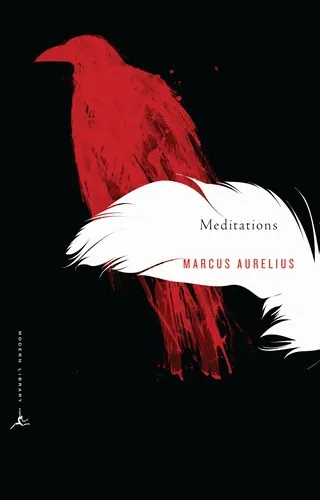
Marcus Aurelius's Meditations is the foundation: written for himself, not for publication, by the most powerful man in the Roman world during the worst stretch of his reign (the Marcomannic Wars, plague, the betrayal of Cassius). The recurring theme: control what you can control (your judgment, your effort, your character), accept what you can't (everything else), and do the right thing in front of you right now.
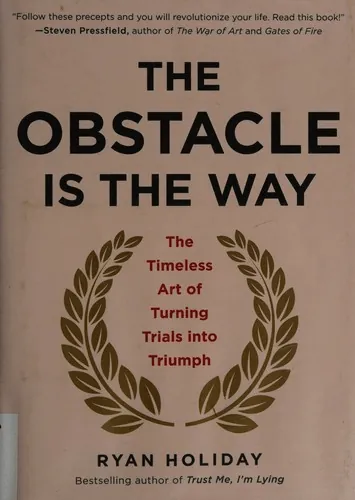
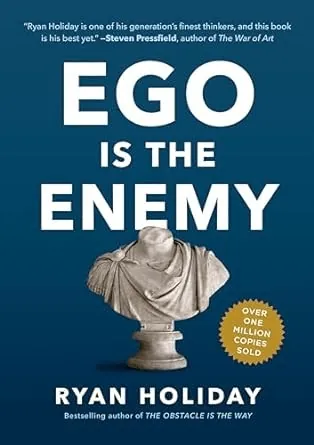
Ryan Holiday's The Obstacle Is the Way translates Aurelius's "the impediment to action advances action" into a 21st-century operator framework. The trilogy completes with Ego Is the Enemy (most failures aren't from incompetence; they're from ego refusing to do the boring foundational work) — Holiday makes Stoicism actionable for non-academic readers without watering down the substance.
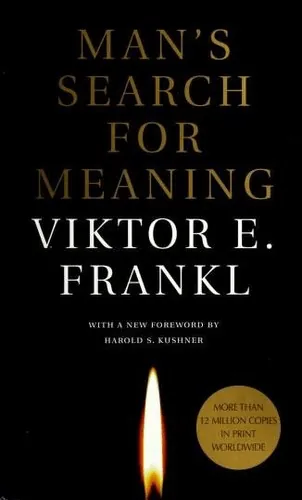
Viktor Frankl's Man's Search for Meaning is Stoic without being labeled as such — Frankl's logotherapy ("between stimulus and response, there is a space; in that space is our power to choose") is the same insight Aurelius arrived at in a different way. Reading Frankl alongside Aurelius makes both clearer.
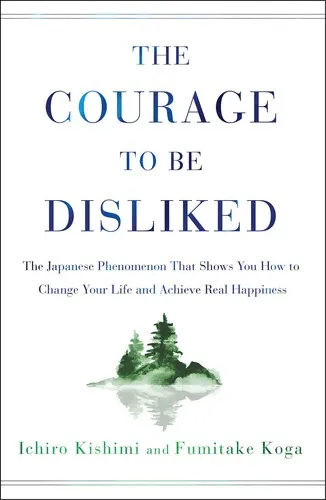
Ichiro Kishimi and Fumitake Koga's The Courage to Be Disliked introduces Adlerian psychology, which overlaps heavily with Stoic ethics (focus on what you control; separate tasks; you choose meaning) but argues from a different framing — the dialogue form lets you watch a skeptic work through the implications in real time.
Read together: Stoicism isn't about suppressing emotion or accepting whatever happens. It's about staying clear on what you control (your response) and what you don't (everything else), then doing the next right thing.
The reading list
Each book below is a step in the topic. Tap through to chapter summaries (free, no signup) or jump straight to the full book on Amazon.
 112 chapters · 20.5 min
Meditations
by Marcus Aurelius
The foundation. Marcus Aurelius wrote it for himself; the recurring theme is control what you can, accept what you can't, do right now.
 28 chapters · 14 min
The Obstacle Is the Way
by Ryan Holiday
Holiday's modern translation. Three disciplines (perception, action, will) operationalize Aurelius for non-academic readers.
 39 chapters · 16.5 min
Ego Is the Enemy
by Ryan Holiday
The companion to Obstacle. Most failures aren't incompetence — they're ego refusing to do the boring foundational work.
 424 chapters · 41.5 min
Man’s Search for Meaning
by Viktor E. Frankl
Stoic without being labeled. Frankl's logotherapy arrived at Aurelius's insight independently — reading both makes both clearer.
 56 chapters · 11 min
The Courage to Be Disliked
by Ichiro Kishimi & Fumitake Koga
Adlerian psychology in dialogue form. Heavy overlap with Stoic ethics — separation of tasks, choice of meaning, focus on control.
Key concepts in this topic
Tap a concept for its definition + primary book attribution. All concepts: browse the full glossary →
More topics
19 other topic clusters in the library — habits + behavior change, influence + persuasion, attention + focused work, decision-making + cognitive bias, startups + business + the operator mindset, mindset + growth + grit, power + social dynamics + how the world actually works, cognition + how the mind works, money + wealth + financial behavior, leadership, creativity, psychology, communication, resilience, productivity, negotiation, career strategy, risk + uncertainty, meaning + purpose. Each has its own curated reading list with synthesis. Browse all topics →