
Meditations
Listen to it free. Get Meditations on Audible with a free trial for eligible new members — cancel anytime.
Start listening freeon AudibleNew members only · many titles are included with the membership. As an Amazon Associate, Read Stacks earns from qualifying purchases and membership trials at no extra cost to you.
What this book is, and who it's for
The personal journal of a Roman emperor, written ~170 AD on military campaign and not intended for publication, has survived nineteen centuries because it is the most-honest sustained Stoic practice ever put to paper. Marcus Aurelius did not write to teach; he wrote to remind himself of what he already knew but kept forgetting. The twelve books move through the foundational Stoic disciplines — accept change, control your judgments, do your duty, hold your composure under provocation, remember you will die — in the voice of someone testing each principle against the genuine hardship of governing an empire at war. Read this as the source text for every modern Stoic revival; you will find that everything written since is footnotes on Marcus's morning notes to himself.
Perception (how you interpret events), action (what you do in response), and will (what you accept when nothing can be done) — the three lenses through which Marcus applies Stoic practice across his private journal.
How to apply Meditations in 3 steps
- 1Examine perception first
When something upsets you, before responding, ask: is the upsetting thing the event itself, or my judgment about the event? Marcus's discipline of perception is the first move because most distress is in the judgment layer, which is the layer you can change.
- 2Act with deliberate composure
After perception, decide what action the situation actually requires. Strip away social-performance pressure (looking strong, looking right, looking decisive for its own sake). The action that survives the stripping is the action Marcus's discipline of action calls for.
- 3Accept what cannot be changed
For the part of the situation outside your control (other people's responses, outcomes, the past), Marcus's discipline of will is: accept it without internal protest. The acceptance is not passivity; it is the precondition for putting energy into the parts you can change.
Chapters
- Chapter 1Book 1: Debts and Lessons1.5 min
- Chapter 2Book 2: On the River Gran1.5 min
- Chapter 3Book 3: At Carnuntum2 min
- Chapter 4Book 4: Cosmos and Change1.5 min
- Chapter 5Book 5: The Morning Question1.5 min
- Chapter 6Book 6: Perception and Justice2 min
- Chapter 7Book 7: Composure Under Provocation1.5 min
- Chapter 8Book 8: Annoyances and Opinions1.5 min
- Chapter 9Book 9: Doing Good for Its Own Sake1.5 min
- Chapter 10Book 10: Honoring Nature2 min
- Chapter 11Book 11: Theatrical Lives1.5 min
- Chapter 12Book 12: Imminence of Death1.5 min
How to read this book. Each chapter is a ~30-second summary — the core insight, no filler. Open the chapters that grab you. If the book resonates, hear the full audiobook free with an Audible trial or buy the edition on Amazon (links below, affiliate-disclosed).
Meditations pairs well with
A single book is an argument. A stack is a curriculum. Meditations appears in this curated reading path — each pairs it with other books that sharpen its ideas, in a suggested reading order.
More books like Meditations
The other books in the curated reading paths Meditations belongs to. Each one sharpens, extends, or counter-argues something Meditations establishes — the compound is the reason these books sit together in a stack.
- Find meaningThe Obstacle Is the WayRyan Holiday
- Find meaningMan’s Search for MeaningViktor E. Frankl
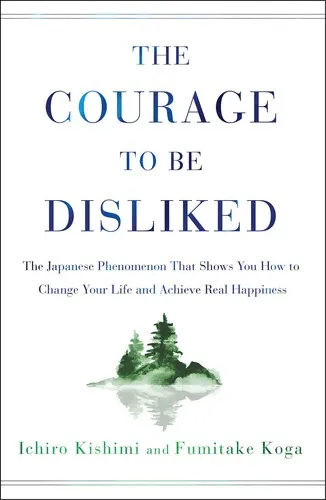
- Find meaningThe Courage to Be DislikedIchiro Kishimi & Fumitake Koga
- Find meaningSapiensYuval Noah Harari
- Find meaningHomo DeusYuval Noah Harari
- Find meaningEssentialismGreg McKeown
- Find meaningTribeSebastian Junger
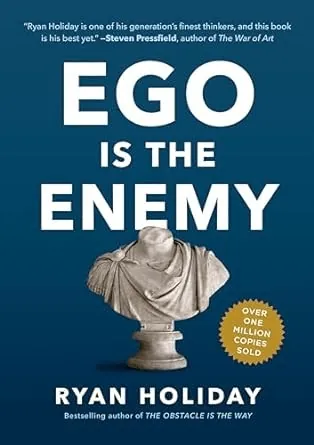
- Find meaningEgo Is the EnemyRyan Holiday
Frequently asked questions
What is Meditations about?+
The personal journal of a Roman emperor, written ~170 AD on military campaign and not intended for publication, has survived nineteen centuries because it is the most-honest sustained Stoic practice ever put to paper.
How long does it take to read Meditations?+
The full Meditations typically takes 4-6 hours to read cover-to-cover. The Read Stacks chapter summaries cover the same ideas in ~20.5 minutes total (12 chapters at ~30 seconds each).
Who is Meditations for?+
Meditations is for readers wanting practical philosophy — ideas you can apply in difficult moments, not abstract theory. Background in philosophy is not assumed; the writing is accessible.
What are the key ideas in Meditations?+
The book covers Book 1: Debts and Lessons, Book 2: On the River Gran, Book 3: At Carnuntum, Book 4: Cosmos and Change and Book 5: The Morning Question. Each chapter has a free summary on Read Stacks (~30 seconds each).
Is Meditations worth reading?+
If you're interested in Stoic philosophy applied to modern life, Meditations is widely considered essential. The Read Stacks chapter summaries help you decide — read the free first chapter, then buy the full book on Amazon if the argument resonates.
Books like Meditations
If Meditations resonated, these non-fiction books pick up the same threads.

From Read Stacks · Learn
How to get more out of this book
Three short guides: how to take notes on a non-fiction book, how to summarise a chapter in your own words, and the retention techniques that decide whether what you read here is still useful six months from now.
- How do I take notes on a non-fiction book?
Decide what the notes are for, read a full section before writing, and use the same short layout for every chapter: claim, reasons, evidence, terms and your own response, all in your own words with page numbers. Turn each note into questions for review, and finish with a one-page summary of the whole book.
5 min read
- How do I summarise a non-fiction chapter?
Read the chapter's opening and closing pages first, write its main claim as one sentence, list the two to four reasons the author gives and the best piece of evidence, then close the book and write a short paragraph from memory. Check it against the text and add one clearly labelled line of your own.
5 min read
- I read a lot of books but can't remember anything. What works?
Forgetting most of what you read is normal, not a personal failing — your brain wasn't designed to retain prose at the rate modern readers consume it. The practices that DO work share one thing: they force you to USE the material instead of just consuming it. Six specific techniques, each tested across decades.
7 min read
Appears in these topics
Meditations is part of 2 curated reading lists — each a “best books on X” cluster with a synthesis on how the books fit together.