Best books on productivity
Real productivity isn't doing more, faster — it's doing the right things with full attention, run by a system instead of willpower.
Listen to it free. Go deeper — many of the books on this topic are free on Audible with a trial.
Start listening freeon AudibleNew members only · many titles are included with the membership. As an Amazon Associate, Read Stacks earns from qualifying purchases and membership trials at no extra cost to you.
The productivity industry sells speed: more apps, more hacks, more done per hour. Every book in this cluster quietly rejects that. Their shared argument is that productivity is not efficiency (doing things faster) but effectiveness (doing the right things at all) — and that it runs on systems and attention, not hustle or willpower. The through-line is subtraction and structure: decide what matters, protect the focus it requires, and offload the rest to a system you trust.
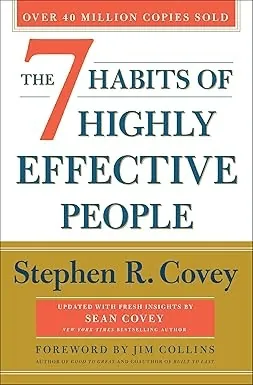
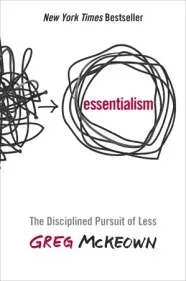
Stephen Covey's The 7 Habits of Highly Effective People is the foundation because it starts upstream of any tactic: with character and priorities. "Begin with the end in mind" and "put first things first" — his urgent/important matrix shows that most people drown in urgent-but-unimportant work and never reach the important-but-not-urgent work where real results live. Greg McKeown's Essentialism sharpens this into a single discipline: the pursuit of less but better. His rule — "if it isn't a clear yes, then it's a clear no" — makes saying no the core productive act, because every yes you don't mean steals from the few things that matter.
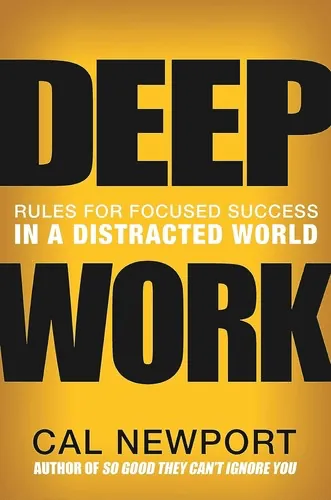
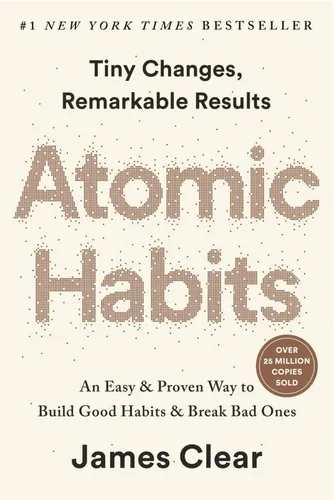
Cal Newport's Deep Work supplies what the important work actually requires: sustained, distraction-free focus, a skill he argues is becoming rare exactly as it becomes valuable. His concept of "attention residue" explains why constant task-switching quietly wrecks output. James Clear's Atomic Habits solves the consistency problem — systems beat goals, and shaping your environment beats relying on motivation, so the productive behavior runs on autopilot. David Allen's Getting Things Done closes the loop with the mechanics: capture everything out of your head into a trusted external system, then clarify and organize it, so attention is freed for the work itself — Allen's "mind like water."
Read together: productivity is right priorities (Covey) + ruthless less (McKeown) + protected focus (Newport) + automatic systems (Clear) + a trusted external system (Allen) — never just speed.
The reading list
Each book below is a step in the topic. Tap through to chapter summaries (free, no signup) or jump straight to the full book on Amazon.
 110 chapters · 17 min
The 7 Habits of Highly Effective People
by Stephen R. Covey
The foundation: effectiveness before efficiency. Covey's “begin with the end in mind,” “put first things first,” and the urgent/important matrix explain why most busyness produces nothing — you never reach the important-but-not-urgent work where results live.
 222 chapters · 35.5 min
Essentialism
by Greg McKeown
McKeown's discipline of less but better. His rule — “if it isn't a clear yes, then it's a clear no” — reframes saying no as the core productive act, because every half-hearted yes steals capacity from the few things that genuinely matter.
 39 chapters · 16 min
Deep Work
by Cal Newport
Newport on what the important work actually demands: sustained, distraction-free focus, a skill growing rare as it grows valuable. His “attention residue” explains why constant task-switching silently wrecks output — and why protected focus blocks are non-negotiable.
 422 chapters · 39.5 min
Atomic Habits
by James Clear
Clear solves consistency: systems beat goals, and a designed environment beats willpower. The productive behavior should run on autopilot via cues and small frictions, so output doesn't depend on how motivated you feel that day.
- Getting Things DoneDavid Allen52015 · find your next read
Getting Things Done
by David Allen
Allen supplies the mechanics: capture everything out of your head into a trusted external system, then clarify and organize it. His “mind like water” is the payoff — attention freed from remembering, so it's fully available for the work itself.
More topics
19 other topic clusters in the library — habits + behavior change, influence + persuasion, Stoicism + Stoic philosophy, attention + focused work, decision-making + cognitive bias, startups + business + the operator mindset, mindset + growth + grit, power + social dynamics + how the world actually works, cognition + how the mind works, money + wealth + financial behavior, leadership, creativity, psychology, communication, resilience, negotiation, career strategy, risk + uncertainty, meaning + purpose. Each has its own curated reading list with synthesis. Browse all topics →