Best books on cognition + how the mind works
What we know about thinking, learning, and the long arc of human cognition.
Listen to it free. Go deeper — many of the books on this topic are free on Audible with a trial.
Start listening freeon AudibleNew members only · many titles are included with the membership. As an Amazon Associate, Read Stacks earns from qualifying purchases and membership trials at no extra cost to you.
Cognition is the operating system everything else runs on. The five books in this cluster zoom in (how an individual mind works) and zoom out (how cognition shaped — and is reshaping — civilization).
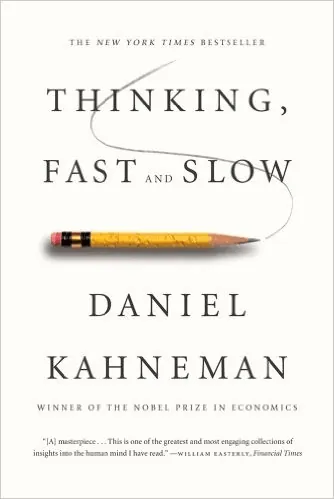
Daniel Kahneman's Thinking, Fast and Slow is the operating-system map: System 1 (fast, automatic, error-prone) vs. System 2 (slow, deliberate, lazy). Once you have this distinction, you can audit your own thinking and design environments that compensate for the predictable failure modes.
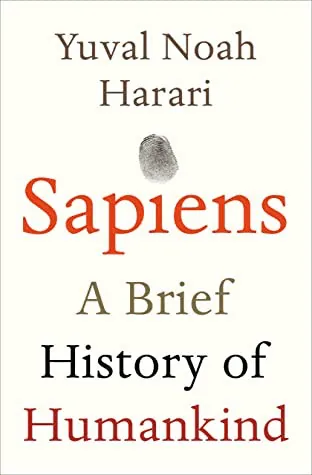
Yuval Noah Harari's Sapiens zooms out across 70,000 years: the cognitive revolution (~70,000 BCE) is the moment our ancestors developed the capacity for shared fictions — money, law, religion, nations — that let strangers cooperate at scale. Harari's argument is unsettling and unavoidable: nothing about our current institutional architecture is necessary; it's all a shared imagination we could, in principle, rewrite.
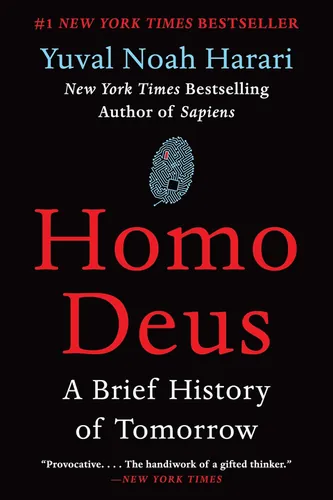
Harari's Homo Deus runs the thought experiment forward: as biotechnology and AI advance, the cognitive substrate itself becomes editable. The questions Harari raises (what is intelligence apart from consciousness? what happens when machines have one without the other?) are now urgent rather than speculative.
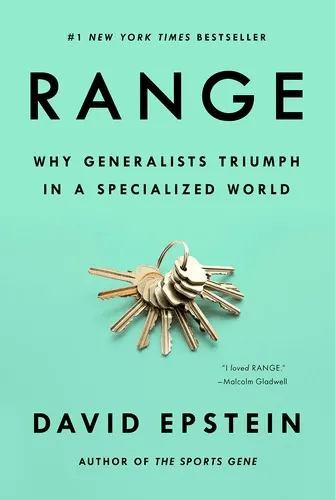
David Epstein's Range sharpens the cognitive-development picture: in complex domains, generalists with broad analogies outperform specialists with deep drill-down. The implication for learning: variety isn't dilution; it's the substrate that lets you recognize when a current problem rhymes with a past one.
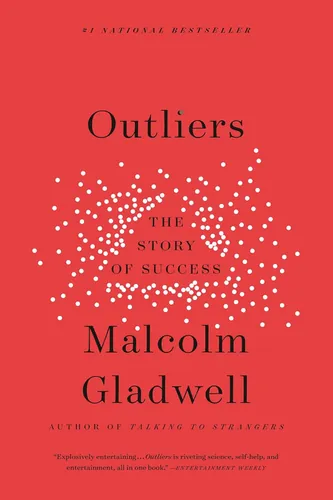
Malcolm Gladwell's Outliers connects cognition to outcome: talent + 10,000 hours + birth-year luck + cultural legacy interact to produce the outliers we call "geniuses." The cognitive-development view is necessary but not sufficient — context decides whether the cognitive apparatus actually gets used.
Read together: an individual operating-system map (Kahneman), the 70,000-year cognitive arc (Harari × 2), the development model for learning (Epstein), and the context that decides whether cognition produces outcomes (Gladwell).
The reading list
Each book below is a step in the topic. Tap through to chapter summaries (free, no signup) or jump straight to the full book on Amazon.
 138 chapters · 75.5 min
Thinking, Fast and Slow
by Daniel Kahneman
Operating-system map. System 1 vs System 2 lets you audit your own thinking and design environments that compensate for failure modes.
 221 chapters · 36 min
Sapiens
by Yuval Noah Harari
70,000-year zoom-out. The cognitive revolution let strangers cooperate at scale via shared fictions — money, law, religion are imagination we could rewrite.
 316 chapters · 22 min
Homo Deus
by Yuval Noah Harari
Forward thought experiment. As biotech and AI advance, the cognitive substrate becomes editable. Questions are now urgent, not speculative.
 410 chapters · 16.5 min
Range
by David Epstein
Development model. Generalists with broad analogies outperform specialists in complex domains. Variety builds the substrate.
 513 chapters · 20 min
Outliers
by Malcolm Gladwell
Context layer. Talent + 10,000 hours + luck + cultural legacy interact. Cognition is necessary but not sufficient — context decides outcome.
Key concepts in this topic
Tap a concept for its definition + primary book attribution. All concepts: browse the full glossary →
More topics
19 other topic clusters in the library — habits + behavior change, influence + persuasion, Stoicism + Stoic philosophy, attention + focused work, decision-making + cognitive bias, startups + business + the operator mindset, mindset + growth + grit, power + social dynamics + how the world actually works, money + wealth + financial behavior, leadership, creativity, psychology, communication, resilience, productivity, negotiation, career strategy, risk + uncertainty, meaning + purpose. Each has its own curated reading list with synthesis. Browse all topics →