Best books on leadership
Leadership isn't charisma or a title — it's earned trust, a clear why, and the courage to do what authority lets you avoid.
Listen to it free. Go deeper — many of the books on this topic are free on Audible with a trial.
Start listening freeon AudibleNew members only · many titles are included with the membership. As an Amazon Associate, Read Stacks earns from qualifying purchases and membership trials at no extra cost to you.
The popular image of a leader is the charismatic visionary at the front of the room — the smartest person, the loudest voice, the one with the answers. Almost every book in this cluster argues that this image is not just incomplete but backwards. Leadership isn't a personality you're born with or a title you're granted; it's a relationship built on trust, clarity, and the willingness to do the uncomfortable things authority lets you avoid. The through-line across these five is that you lead people, not tasks — and people follow safety and purpose, not power.
Simon Sinek's Start with Why sets the foundation: people don't buy what you do, they buy why you do it, and the leader's first job is to make the purpose clear enough that others can act on it without being told. Patrick Lencioni's The Five Dysfunctions of a Team shows what that purpose sits on — trust. His pyramid begins with vulnerability-based trust, and when it's absent every layer above (healthy conflict, commitment, accountability, results) quietly collapses into "artificial harmony." Brené Brown's Dare to Lead names the skill that builds that trust: the courage to be vulnerable, to "rumble" with hard truths, and to remember that "clear is kind" — armored, conflict-avoidant leadership feels safer and corrodes everything.
Kim Scott's Radical Candor turns this into a daily practice with one model: care personally and challenge directly at the same time. Drop either axis and you slide into ruinous empathy, obnoxious aggression, or manipulative insincerity — the three ways feedback fails. Jocko Willink's Extreme Ownership supplies the spine: the leader owns everything in their world, there are "no bad teams, only bad leaders," and accountability flows up before it flows down.
Read together: leadership is clear purpose + vulnerability-based trust + the courage for hard conversations + candid feedback + total ownership — almost none of which has anything to do with being in charge.
The reading list
Each book below is a step in the topic. Tap through to chapter summaries (free, no signup) or jump straight to the full book on Amazon.
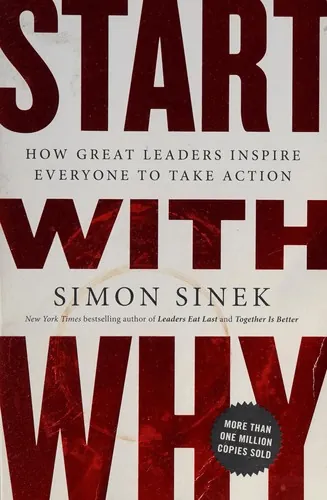 113 chapters · 21.5 min
Start with Why
by Simon Sinek
The foundation: people follow a cause, not a manager. Sinek's argument is that clarity of purpose — the “why” — lets a team act in concert without being micromanaged. Leadership begins by making the reason for the work unmistakable.
- The Five Dysfunctions of a TeamPatrick Lencioni22006 · find your next read
The Five Dysfunctions of a Team
by Patrick Lencioni
Names what every team is built on — vulnerability-based trust — and how its absence cascades: no trust, no real conflict, no commitment, no accountability, no results. Lencioni's pyramid is the diagnostic for why capable teams underperform.
- Dare to LeadBrené Brown32018 · find your next read
Dare to Lead
by Brené Brown
Reframes vulnerability as the core leadership skill, not a weakness. Brown's research argues courage and connection — “rumbling” with hard truths, and that “clear is kind” — build the trust Lencioni's pyramid rests on. The antidote to armored leadership.
- Radical CandorKim Scott42019 · find your next read
Radical Candor
by Kim Scott
Turns leadership into a daily feedback practice: care personally AND challenge directly. Scott's two-axis model exposes the three failure modes — ruinous empathy, obnoxious aggression, manipulative insincerity — that stop managers from saying the useful thing.
- Extreme OwnershipJocko Willink52015 · find your next read
Extreme Ownership
by Jocko Willink
Supplies the accountability spine: the leader owns everything in their world — “there are no bad teams, only bad leaders.” Willink's combat-tested principle is that blame flows nowhere and ownership flows up first, which is what makes a team trust you.
More topics
19 other topic clusters in the library — habits + behavior change, influence + persuasion, Stoicism + Stoic philosophy, attention + focused work, decision-making + cognitive bias, startups + business + the operator mindset, mindset + growth + grit, power + social dynamics + how the world actually works, cognition + how the mind works, money + wealth + financial behavior, creativity, psychology, communication, resilience, productivity, negotiation, career strategy, risk + uncertainty, meaning + purpose. Each has its own curated reading list with synthesis. Browse all topics →