The earth was in balance until humans: the books behind the meme
The meme is half right. People did wipe out a lot of species, but the planet was never in balance, and three books explain the real argument.
Published
On this page▾
Two minutes of old paintings, a caption about a planet in perfect balance, and then sailors chasing dodos. The meme works because it is one sharp idea. It is also a little too tidy, and the books behind it are better than the meme.
What the meme gets right
When people reached a new landmass, the large animals living there often disappeared soon after. Harari's Sapiens collects the evidence for Australia and the Americas in the chapter "The Flood": the giant marsupials of Australia and the mammoths and giant sloths of the Americas vanish in the same window as human arrival, which is why many researchers see people as a main suspect. Not all of them agree, because climate shifts were happening at the same time, and the book says so.
The dodo is the clean case. The Dutch reached Mauritius in 1598, and within about a century the bird was gone. Sailors hunted it, but so did the rats, pigs and monkeys that came off their ships, and the forest it lived in was cleared. People did not need to chase every bird for the island to lose it.
What the meme gets wrong
Earth was never in balance. Kolbert's The Sixth Extinction starts from the fact that the planet has already had five mass extinctions with no humans involved, and that the fossil record is mostly a list of species that did not last. Her argument is narrower and sharper than the caption: the current loss rate looks like the sixth such event, and this time one species is the cause, through hunting, habitat loss, invasive species and a changing climate.
Three books, three jobs
Read in this order and each one answers the question the previous one raises. Sapiens gives you the long view and the pattern. The Song of the Dodo shows how extinction actually happens on an island, through habitat shrinking and species arriving, which is the mechanism behind the dodo story. The Sixth Extinction brings it to the present, with frogs, coral and the scientists measuring them.
Each one is a long book. If you want one idea per chapter before you commit, the Sapiens chapter summaries on this site take about a minute and a half each, including the extinction chapter.
The honest version of the caption
Not "the earth was perfect until humans". Try: the earth was always changing, and for the first time the change has a single author who can read about it. That is a good reason to read the books.
The books behind it
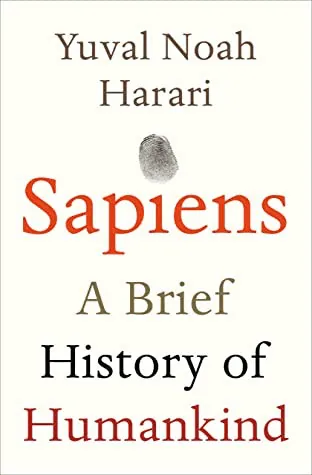 Book 1SapiensYuval Noah Harari
Start here for the long view: the chapter on the extinction wave that followed humans into Australia and the Americas.
See price on Amazon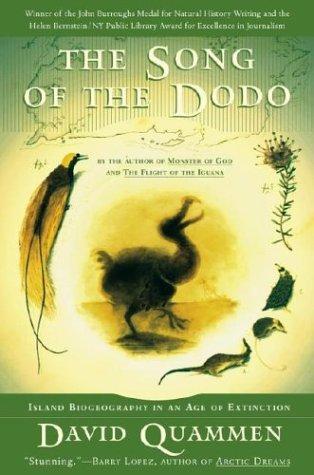 Book 2The Song of the DodoDavid Quammen
Read second to see how a species actually disappears from an island, and why small habitats are so fragile.
See price on Amazon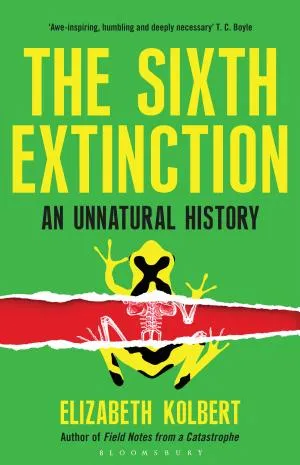 Book 3The Sixth ExtinctionElizabeth Kolbert
Finish with the present: the case that today's losses are a sixth mass extinction, told through frogs, coral and the people counting them.
See price on Amazon
Keep reading
- Are book summaries actually useful, or am I just cheating?
Chapter summaries are a navigation tool, not a substitute. Used right, they help you read more books fully — by helping you avoid the wrong ones. Used wrong, they're a comfort blanket that lets you feel like you're reading without engaging with the material.
6 min read
- I read a lot of books but can't remember anything. What works?
Forgetting most of what you read is normal, not a personal failing — your brain wasn't designed to retain prose at the rate modern readers consume it. The practices that DO work share one thing: they force you to USE the material instead of just consuming it. Six specific techniques, each tested across decades.
7 min read
- Why do I keep buying books I never finish?
Most non-fiction readers buy 5-15 books per year and finish 2-3. The pile is not laziness — it's a navigation failure. Four specific reasons the system fails and four specific fixes, including how to use curated reading stacks to avoid the bad-purchase loop.
5 min read
- How do I actually choose my next non-fiction book?
Most non-fiction picks are driven by marketing, social proof, or recency — none of which correlate with the book actually being worth your time. Five better criteria, each cheap to apply, plus when to trust a recommendation and when to ignore it.
6 min read
- What is a "reading stack," and when does it actually help?
A reading stack is four books read in deliberate order around a shared question, with editorial framing. Stacks work because related books reinforce each other in memory — the cognitive condition for retention. They don't help when you only need one specific answer or when the books don't actually share a framework.
5 min read
- The compounding library: how reading four stacks in four quarters changes what you know
Reading 16 unrelated books gives you 16 isolated arguments. Reading 4 stacks of 4 books each — books that genuinely reinforce each other — gives you 4 frameworks deep enough to use. Over a year, that's the same shelf hours, a fundamentally different outcome. The mechanism is cognitive (related books consolidate in memory). The discipline is selection.
7 min read
- How do I summarise a non-fiction chapter?
Read the chapter's opening and closing pages first, write its main claim as one sentence, list the two to four reasons the author gives and the best piece of evidence, then close the book and write a short paragraph from memory. Check it against the text and add one clearly labelled line of your own.
5 min read
- How do I read a book for class when I'm short on time?
Find out what the class needs from the book, map the whole book from its contents, introduction and conclusion, then read the central chapters closely and skim the rest. Finish by writing one page from memory and preparing one question and one point to raise in the seminar.
5 min read
- How do I take notes on a non-fiction book?
Decide what the notes are for, read a full section before writing, and use the same short layout for every chapter: claim, reasons, evidence, terms and your own response, all in your own words with page numbers. Turn each note into questions for review, and finish with a one-page summary of the whole book.
5 min read
- How do I annotate a book?
Use a small, consistent set of symbols, add a few words in the margin saying why a passage matters, and annotate after reading a section rather than during every sentence. Summarise each chapter in two or three lines and build a personal index of themes and page numbers inside the cover.
5 min read
- How to read a difficult book without giving up halfway
Don't start a hard book on page one and grind. Map its structure first, read it once quickly for the shape of the argument, then go back slowly to the chapters that carry the weight, testing yourself as you go.
6 min read
- How to find the main argument of a non-fiction book
Separate the topic from the thesis, then find the thesis where authors usually put it: the subtitle, the introduction and the conclusion. Use the table of contents as a map of the argument and write the claim in your own words.
5 min read
- How to prepare for a seminar on a book
A seminar tests whether you can discuss a book's argument, not whether you read every page. Arrive knowing the main claim, with three marked passages, two or three open questions, and a short position you're willing to revise.
5 min read
- How to get through a university reading list before you start
Most pre-arrival lists are a menu, not a checklist. Read anything required and any common read in full, read two or three central books properly, skim the rest with purpose, and borrow before you buy.
5 min read
The library this essay points back to
Every link inside the essay above goes to a specific book or chapter in the Read Stacks library — free to read, no signup, source-cited. Or browse the full library: